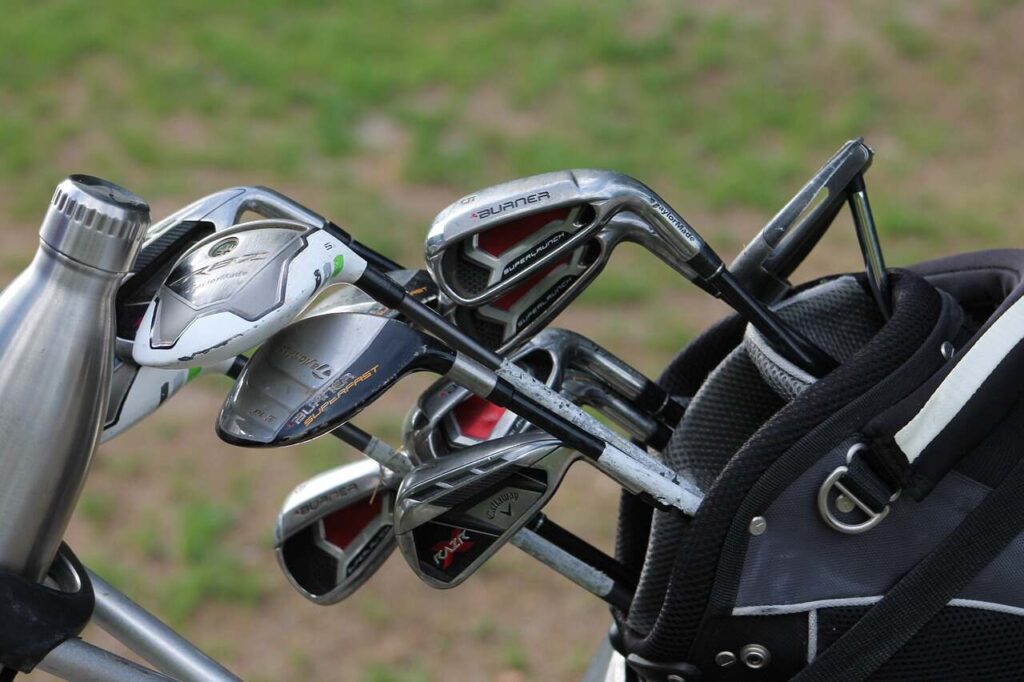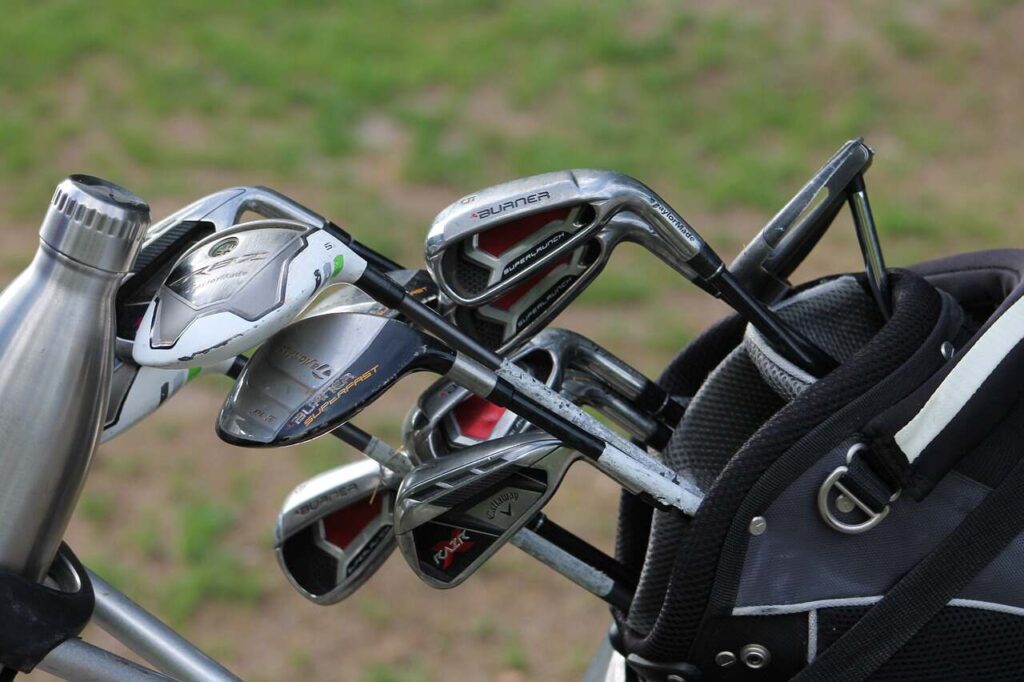
Picking the right golf clubs isn’t about finding some magic set that will fix your slice overnight. It’s about being honest with yourself—matching your current skill level, your actual swing, and your budget to the right gear. It’s taking a good, hard look at your game today, not the one you dream about having next season. It’s about understanding the real difference between forgiving cavity-back irons for a beginner and razor-sharp muscle-backs for a seasoned player, and then getting a professional to confirm your choices. This brings us to the crucial question: how to choose golf clubs that are right for you.
Follow that path, and you’re not just buying clubs; you’re investing in equipment that will actually help you play better golf, instead of fighting against gear that doesn’t fit you.
- Why The Right Golf Clubs Are a Game Changer
- An Honest Look at Your Skill and Goals in Golf
- Decoding Your Golf Bag: What Each Club Does
- Understanding Shafts: The Engine of Your Golf Club
- Matching Shaft Flex to Swing Speed in Golf
- Budgeting for Your Golf Clubs and Why a Fitting is Non-Negotiable
- Making Your Final Decision with Confidence
- FAQ's
Why The Right Golf Clubs Are a Game Changer
Choosing your next set of golf clubs is probably the biggest equipment decision you’ll make in this sport. This is about so much more than just hitting a ball. It’s about finding confidence, discovering consistency, and making the game a whole lot more fun from the first tee to the final putt. A well-matched set becomes a partner out there on the course, complementing your strengths and, just as importantly, forgiving your weaknesses.
Think of it like this: you wouldn’t run a marathon in a pair of heavy hiking boots. In the same way, playing with clubs that don’t fit your swing forces you into all sorts of unnatural compensations. These bad habits can stall your progress and become incredibly tough to unlearn down the road.
The Impact on Your Golf Game
One of the most common mistakes I see is golfers buying clubs that are way too advanced for them. A new player starting out with forgiving, cavity-back irons will find it much easier to get the ball airborne and see straighter shots, even on mis-hits. That positive feedback is huge—it builds excitement and makes them want to get back out on the course.
On the flip side, I’ve seen intermediate players buy a beautiful set of sleek, blade-style irons, thinking they’ll “grow into them.” More often than not, their scores start to climb. Because those clubs have a much smaller sweet spot, a slight mis-hit that would have been okay before now turns into a truly awful shot, killing their confidence and momentum for the round.
The goal is to shift your mindset from simply buying clubs to investing in a set that truly matches your game and your goals. This lays the foundation for every good decision you’ll make on the course.
The sheer size of the global golf club market shows just how critical this decision is for players everywhere. It was valued at around US$4.37 billion in 2025 and is expected to climb to US$5.45 billion by 2032. That growth isn’t just about selling more clubs; it’s driven by constant innovation aimed at matching technology to what real players need, from the beginner who needs maximum forgiveness to the tour pro who demands precise control. You can learn more about the trends shaping the golf club market on persistencemarketresearch.com.
An Honest Look at Your Skill and Goals in Golf
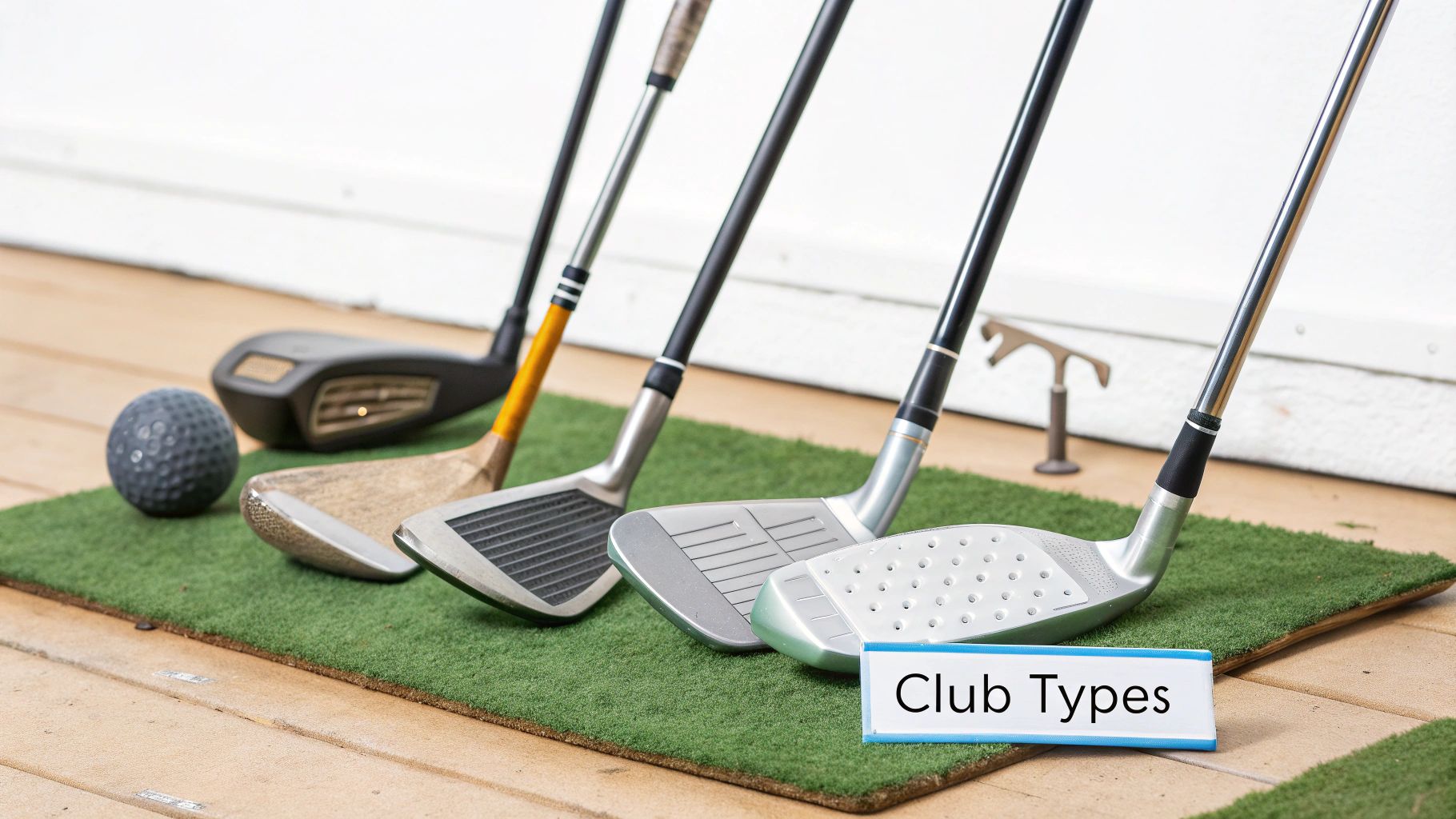
Here’s the biggest trap I see golfers fall into: buying clubs for the player they wish they were, not the player they are right now. It’s a classic case of ego getting in the way of a lower score. The first step in choosing the right clubs is always a brutally honest self-assessment.
We need to move beyond vague labels like “beginner” or “advanced.” Your current game holds all the clues you need to find the perfect equipment. This isn’t about judging your ability; it’s about matching technology to your tendencies to make golf more enjoyable.
Evaluating Your Current Golf Game
Let’s start by looking at some real, on-course metrics. Don’t worry about what you think the numbers should be—just focus on what they actually are.
- Your Typical Score: What do you usually shoot for 18 holes? Be honest. A player who consistently scores over 100 has completely different equipment needs than someone trying to break 80. The higher your score, the more you’ll benefit from forgiveness.
- Consistency of Contact: How often are you really flushing it off the sweet spot? If you frequently hit the ball thin (too low on the face) or fat (catching the ground first), you need clubs designed to help with those exact mis-hits.
- Your Common Miss: When you miss, where does the ball go? A chronic slicer (the ball curving hard right for a right-handed player) can see a huge improvement from clubs with offset or draw-bias weighting. Conversely, a player fighting a hook needs the opposite.
Buying clubs to fix a fundamental swing flaw is a losing battle. However, buying clubs that accommodate your current miss-hit tendencies while you work on your swing is a brilliant strategy for immediate improvement.
Defining Your Golfing Goals
Once you have a clear picture of your game today, think about where you want to go. Your level of commitment directly impacts what kind of clubs will serve you best. There’s no right or wrong answer here, only what’s true for you.
A weekend warrior who plays a few times a month for fun and a bit of friendly competition will love game-improvement irons. These clubs are built with features like wide soles and heavy perimeter weighting, making them incredibly forgiving and easy to get airborne. Their main job is to maximize your enjoyment by minimizing the penalty for imperfect shots.
But if your goal is to seriously lower your handicap and you’re at the range a few times a week, your needs are different. You might start looking at “players distance” or even more traditional players’ irons. These clubs offer more feedback and the ability to shape shots, rewarding a consistent, well-practiced swing.
Golf Player Categories as a Guide
While we don’t want to get stuck on labels, thinking in terms of player categories can be a helpful starting point. It gives you a framework for understanding what different types of clubs are designed to do.
Beginner (Golf Scores 100+)
- Focus: Getting the ball in the air consistently and just having a good time. Forgiveness is the only thing that matters.
- Club Type: Look for complete package sets or super game-improvement irons. These often include hybrids to replace those tricky long irons. If you’re just starting, our guide on the best golf clubs for beginners is an excellent resource to check out.
Intermediate (Golf Scores 85-100)
- Focus: Finding that sweet spot between forgiveness and feel. You’re starting to pure it more often but still need help on your off-center hits.
- Club Type: Game-improvement irons are perfect here. They still offer plenty of help but have a slightly more refined look and feel than the super chunky beginner clubs.
Advanced (Golf Scores Below 85)
- Focus: Precision, workability, and feedback. You can control your ball flight and want clubs that respond to subtle changes in your swing.
- Club Type: “Players distance” irons offer a great blend of forgiveness and control, while forged blades or muscle-backs provide the ultimate feel for the purest ball-strikers.
This honest evaluation is the absolute foundation of your club-buying journey. It ensures you invest in gear that helps you today while paving the way for the golfer you want to become tomorrow.
Decoding Your Golf Bag: What Each Club Does

A golf bag can hold up to 14 clubs, but let’s be real—for a lot of players, a few of them might as well be mysterious artifacts. Understanding what each club is built to do is the key to choosing a set that will actually help your game. Think of your set as a specialized toolkit; you wouldn’t use a sledgehammer for a finishing nail, and the same logic applies on the course.
Instead of just listing clubs, let’s walk through some real on-course situations to see not just what each club is, but why you’d pull it from your bag.
The Golf Power Players: Drivers and Fairway Woods
These are your long-distance specialists, designed purely to get the ball as far down the fairway as humanly possible. They have the biggest heads and the longest shafts for one reason: to generate speed and distance.
The driver, often called the “Big Stick,” is your go-to on most par 4s and par 5s. Its job is simple: maximum distance off the tee. With the lowest loft in your bag (the angle of the clubface, usually between 8-12 degrees), it’s built for a low, penetrating ball flight that gets plenty of roll after landing.
But what about that tight par 4 with trees lining both sides? This is where a fairway wood, like a 3-wood or 5-wood, becomes your best friend. It has more loft than a driver, which makes it easier to control and hit straight, even if it means giving up 20-30 yards. A smart miss in the short grass is always better than a long drive into the woods.
The Versatile Hybrids: Your Secret Weapon in Golf
Hybrids are easily one of the best golf equipment innovations of the last 20 years. They blend the easy-to-hit nature of a fairway wood with the precision of an iron, making them the ultimate problem-solvers.
Picture this: your ball is nestled down in some thick rough, about 180 yards from the green. Trying to muscle a long iron (like a 3 or 4-iron) out of that lie is a tough ask for most golfers. The clubhead gets snagged, you lose power, and the shot goes nowhere. This is exactly where a hybrid shines. Its wider sole is designed to glide through the turf instead of digging, helping you make solid contact and advance the ball with good distance.
Hybrids are often called “rescue clubs” for a reason. They turn difficult long-iron shots from the rough or awkward lies into manageable opportunities, saving you strokes and a lot of frustration.
The Workhorses of the Golf Bag: The Irons
Your irons are the precision tools of the set, designed for approach shots into the green. They make up the bulk of your bag and are numbered, typically from a 4-iron up to a 9-iron. The idea is simple: the lower the number, the less loft it has, and the farther the ball will fly.
Your 7-iron is often seen as the benchmark club—it’s the one you’ll pull for those classic mid-range approaches. A 9-iron, with its higher loft, is for shorter shots where you need the ball to fly high and land softly on the green.
The design of the iron head itself is also a huge factor.
- Cavity Back Irons: These have weight pushed to the perimeter of the clubhead. This design creates a much larger sweet spot, making them way more forgiving if you don’t strike it perfectly.
- Muscle Back (or Blade) Irons: These have a solid, compact head with weight concentrated right behind the sweet spot. They offer incredible feel and control for highly skilled players but are notoriously unforgiving on mishits.
For a deeper dive into the specifics of each club, you might be interested in our complete guide covering all the different types of golf clubs.
The Scoring Golf Clubs: Wedges and The Putter
This is where you make your money. Wedges are high-lofted irons used for short shots around the green, out of bunkers, and for full swings inside about 100 yards. The pitching wedge (PW) is the lowest lofted of the group, used for longer approaches. The sand wedge (SW) has more loft and features something called bounce—a rounded sole that helps it skim through the sand instead of digging in.
And finally, the putter. It’s the most specialized club in your bag, with one job and one job only: roll the ball into the hole. The old saying, “Drive for show, putt for dough,” is absolutely true. Finding a putter that fits your stroke and gives you confidence is non-negotiable.
The global golf club market was valued at about USD 4.05 billion in 2024 and is expected to grow to USD 4.83 billion by 2030. This growth is fueled by technology designed to perfectly balance forgiveness, control, and distance. Innovations like perimeter weighting and adjustable features are making it easier than ever for players to find clubs that match their individual style. You can explore more about these market trends and technological advancements on grandviewresearch.com.
Understanding Shafts: The Engine of Your Golf Club
Most golfers get fixated on the shiny, new clubhead, but the shaft is the real engine that delivers it to the ball. The shaft is the only component transferring all the energy from your swing into the shot. If your shaft doesn’t match your swing, finding any kind of consistency is going to be a constant uphill battle.
It’s like choosing the right tires for a car. You wouldn’t put racing slicks on a family SUV. The right shaft optimizes your power and control, while the wrong one will make every swing feel like a struggle.
Matching Shaft Flex to Your Swing Speed in Golf
The single most important characteristic of a shaft is its flex—how much it bends during the swing. This bending action stores and then unleashes energy at impact. If the timing of that release is out of sync with your swing speed, your shots will go haywire.
A common mistake is assuming a stiffer shaft automatically means more distance. In reality, a shaft that’s too stiff for your swing won’t bend enough to properly load energy. The result? A loss of power and a ball flight that’s typically low and to the right (for a right-handed golfer).
On the flip side, a shaft that’s too flexible will bend too much, causing the clubhead to arrive at the ball inconsistently. This often leads to shots that balloon high in the air and hook to the left as the clubface snaps shut through impact.
This is where knowing your numbers really helps.
As you can see, there’s a direct relationship between how fast you swing and the stiffness you’ll need to maintain control and get the most out of your swing.
This table breaks it down even further, giving you a solid starting point.
Matching Shaft Flex to Swing Speed in Golf
| Shaft Flex | Driver Swing Speed (MPH) | Typical Driving Distance (Yards) |
|---|---|---|
| Ladies (L) | Below 75 | Below 200 |
| Senior (A) | 75-85 | 200-240 |
| Regular (R) | 85-95 | 240-275 |
| Stiff (S) | 95-105 | 275-300 |
| Extra Stiff (X) | Above 105 | Above 300 |
While getting on a launch monitor is the best way to be certain, this chart is a fantastic guide for narrowing down your options based on how far you typically hit your driver.
The Great Golf Debate: Steel vs. Graphite
The material your shaft is made from also plays a huge role in how the club feels and performs. The two main players are steel and graphite, and they each bring something different to the table.
Steel Shafts
- Feel & Control: Steel is heavier and gives you more feedback, which is why skilled players often prefer it for precise control on iron shots.
- Consistency: It provides a rock-solid, stable feel that has made it the standard for irons for decades.
- Cost: Generally, steel shafts are less expensive than their graphite counterparts.
Graphite Shafts
- Speed & Distance: Being much lighter, graphite allows you to swing faster. It’s the undisputed king for drivers and fairway woods for this reason.
- Vibration Dampening: Graphite absorbs more of the shock at impact, which is a big benefit for players with joint issues like arthritis.
- Versatility: It’s becoming more common in irons, especially for seniors and players with slower swings who could use a little help generating more distance.
What Is Kick Point in Golf Clubs ?
Once you’ve got flex and material sorted, the kick point (or bend point) is a more advanced detail that fine-tunes your ball’s trajectory. Simply put, it’s the spot on the shaft that bends the most during your swing.
- A low kick point bends closer to the clubhead, helping launch the ball higher. This is a game-changer for players who struggle to get the ball airborne.
- A high kick point bends closer to the grip, producing a lower, more piercing ball flight. This is often preferred by players with high swing speeds who want to avoid shots that “balloon” up into the wind.
- A mid kick point is the happy medium, offering a balanced launch that works for a huge range of golfers.
Don’t forget the grips! Your grip is your only connection to the club. If it’s the wrong size, it can seriously mess with your swing. A grip that’s too thin can cause overactive hands and a hook, while a grip that’s too thick can restrict your hands and lead to a slice.
The grip’s material matters, too. A firm, corded grip might be perfect for a player in a humid climate who needs maximum traction, while a softer, rubber grip offers more comfort. Choosing the right grip is a quick and affordable way to improve the feel of your entire set.
Budgeting for Your Golf Clubs and Why a Fitting is Non-Negotiable
Let’s talk money. Golf clubs are a serious investment, and while figuring out what you need for your game is crucial, making sure it all fits your budget is just as important. The good news? There’s a smart way to approach this, whether you’re buying a starter set off the rack or going for a full custom build.
It helps to know you’re not alone in making this investment. The global golf equipment market was valued at an estimated USD 12.78 billion in 2025 and is expected to hit USD 17.63 billion by 2032. That growth is all about innovation—think advanced materials like titanium and carbon fiber that offer real performance gains. You can dive deeper into the factors driving the golf equipment market on coherentmarketinsights.com.
New vs. Used: What’s Right for You?
One of the first big decisions is whether to buy a shiny new set or go for something pre-owned. Honestly, there are great reasons for both, and it all boils down to your goals and your wallet.
Going with New Golf Clubs:
- The Latest Tech: You get the absolute newest designs engineered for maximum forgiveness and distance.
- Full Warranty: Nothing beats the peace of mind of a manufacturer’s warranty protecting you from defects.
- Customization: You can order them built to your exact specs—shaft, length, grip, you name it.
Opting for Used Golf Clubs:
- Incredible Value: This is the best part. You can often snag premium clubs from just a season or two ago for a fraction of the original cost. It’s a fantastic way to play high-end gear without the sticker shock.
- Lower Risk: If you’re still figuring out your swing or aren’t sure how committed you’ll be, a used set is a much smaller financial hurdle.
Here’s a pro tip for intermediate players: build a “blended” bag. Maybe you splurge on a brand-new driver to get that cutting-edge distance technology but pick up a set of gently used irons that still perform like a dream.
The Myth That Golf Club Fittings Are Just for Experts
Now, let’s get to the single most important piece of financial advice I can give you: get a professional club fitting.
There’s this stubborn myth that fittings are a luxury for scratch golfers and pros. That couldn’t be more wrong. In reality, a fitting is even more valuable for a beginner or a mid-handicapper whose swing is still developing.
Think of it like this: a fitting is an insurance policy against a bad purchase. Spending $100-$150 on a proper fitting session can save you from wasting $1,000 or more on a set of clubs that actively works against your swing. It’s the best way to guarantee your money is well spent.
A professional fitting isn’t about finding the “perfect” swing. It’s about building the perfect clubs for the swing you have right now. This ensures your equipment helps you improve instead of forcing you to develop bad habits around ill-fitting gear.
What to Expect During a Fitting in Golf
A good fitting is a cool, data-driven process. It’s not just whacking a few balls into a net. It’s a detailed analysis that combines your unique body and swing with real-time feedback.
Here’s the typical flow of a session:
- The Interview: First, the fitter will just talk to you. They’ll ask about your game, your goals, your common misses (we all have them!), and of course, your budget.
- Static Measurements: They’ll take some basic measurements like your height and wrist-to-floor distance. This gives them a starting point for things like club length and lie angle.
- Dynamic Analysis: This is the fun part. You’ll start hitting shots on a launch monitor, which spits out all the critical data: clubhead speed, ball speed, launch angle, spin rate, and more. Using this info, the fitter will have you test different heads and shafts, methodically narrowing down the combo that produces the best numbers and the tightest shot patterns for you.
The whole process takes the guesswork out of the equation. You walk away knowing you’ve made a smart, informed decision backed by actual data.
Making Your Final Decision with Confidence

Alright, you’ve put in the work. You’ve done the research, taken a hard look at your game, and waded through all the latest tech. Now for the fun part—pulling the trigger on the set that will become your new on-course partners.
This is where all that theory smacks right into reality. The absolute best way to make sure you get it right is to test your top choices head-to-head.
Book some time at a local driving range or an indoor simulator that has demo clubs from your shortlist. There is simply no substitute for hitting balls with each option to see what truly clicks with your swing. Pay attention to everything—not just the launch monitor data, but the sound at impact and the feel in your hands. One club might produce slightly better numbers, but another might just inspire a ton of confidence when you set it down behind the ball.
Your Pre-Purchase Checklist for your Golf Bag
Before you hand over your credit card, take a breath and run through this final mental checklist. Think of it as your last line of defense against a case of buyer’s remorse.
- Test on Real Grass: If you have the opportunity, hit a few shots off actual turf. A club’s performance off a perfect mat can be deceiving; how it interacts with real-world lies is what really counts.
- Trust Your Gut: Brand names and tour-pro hype are powerful, but nothing beats feel. The club that gives you the best results and feels the most comfortable is always the right choice, no matter what name is on the sole.
- Ask the Final Questions: Get clarity on the little things. Confirm the warranty, understand the return policy, and ask about any potential adjustment costs for things like lie angle tweaks down the road.
This final step isn’t just about comparing numbers on a screen; it’s about validating your entire decision-making process. Trust the homework you’ve done and go with the clubs that genuinely make you excited to get out and play.
Understanding how to choose golf clubs is essential for golfers of all levels. The right clubs can dramatically improve your game, making every round more enjoyable.
FAQ’s
Stepping into the world of golf equipment can feel overwhelming. There’s a lot of tech, a lot of jargon, and a lot of opinions out there. Getting straight answers is the best way to feel good about what you’re buying, so let’s tackle some of the most common questions we hear from golfers just like you.
How Often Should I Replace My Golf Clubs?
There’s no magic number here. It’s less about how old your clubs are and more about how they’re performing for you. Your most-used clubs will wear out the fastest. For a serious golfer, the grooves on a favorite wedge might only last a couple of seasons before they stop grabbing the ball and producing that crisp spin.
Your irons and woods, on the other hand, can easily last five, ten, or even more years. The real signs it’s time to upgrade are when a major leap in technology directly addresses a weakness in your game, or when your game changes dramatically. For instance, if you’ve been taking lessons and your swing speed has jumped 10 mph, those old regular-flex shafts that used to be perfect are probably now holding you back.
Is a Custom Club Fitting Really Worth It for a Beginner?
One hundred percent, yes. It’s a huge myth that fittings are just for low-handicappers. In reality, beginners often get the most out of a fitting. The goal isn’t to dial in perfect, tour-level specs; it’s to avoid starting your golf journey with a major flaw baked into your equipment.
A fitter makes sure your clubs are the right length and lie angle for your body. If your clubs are too long or too short, you’re forced to make awkward adjustments in your posture and swing just to make contact. Those little compensations quickly turn into bad habits that are a real pain to unlearn later on.
Think of a basic fitting as a smart investment in your future enjoyment of the game. It sets you up with equipment that encourages a sound, repeatable swing from day one.
Should I Buy a Complete Set or Build One Piece by Piece?
This really comes down to where you are in your golf journey and what your budget looks like. For most people just starting out, a complete, boxed set is the smartest, most affordable way to go. These packages are designed from top to bottom with forgiveness in mind, giving you everything you need to walk right out onto the course.
Once you move into that intermediate or advanced stage, building a set piece by piece opens up a world of customization. This route lets you hand-select the perfect driver, irons, wedges, and putter that fit your unique game. You can mix and match brands to build a setup that’s perfectly dialed in to your swing.
Here at Golf Inquirer, we believe that having the right information is the key to making smarter choices for your game. For more tips, gear reviews, and insights to help you play better golf, check out all our resources at https://golfinquirer.com.