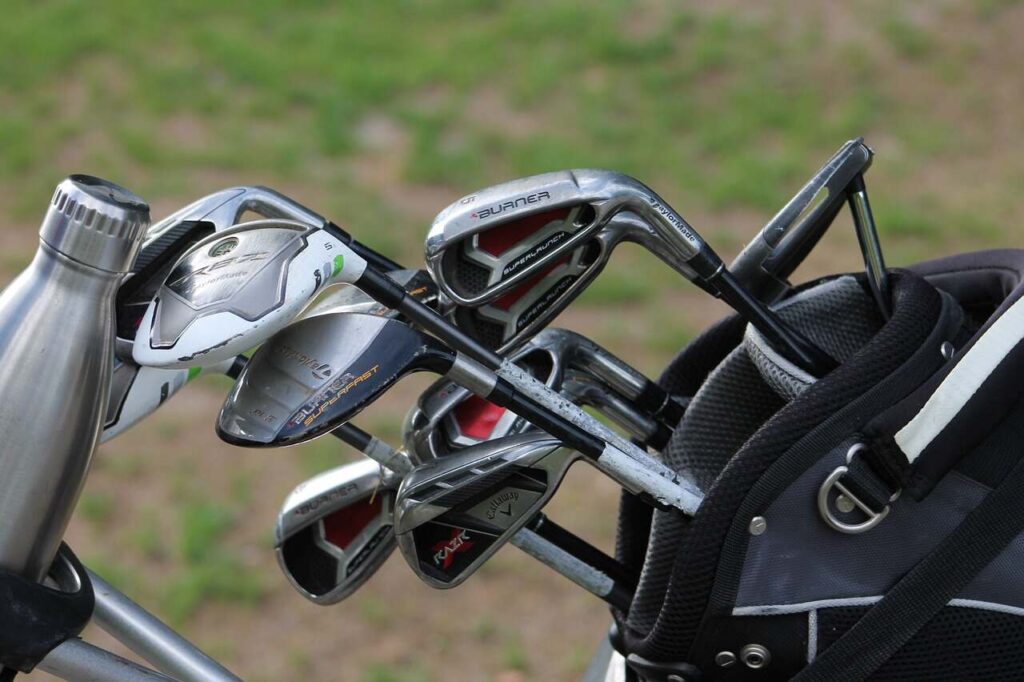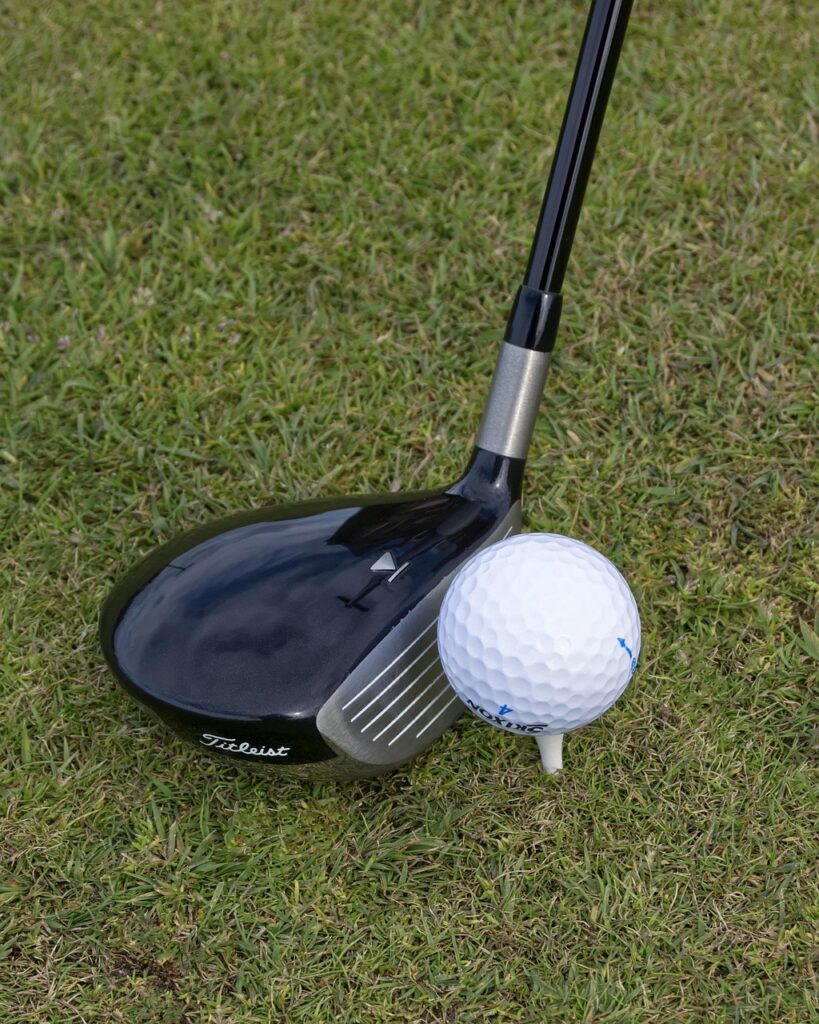
High handicappers rarely lose strokes because they chose the “wrong” club in theory. They lose strokes because the club they pulled does not match the shot they actually hit under real pressure: a little thin, a little off the toe, slightly steep, or from a patchy lie.
That’s why the fairway wood vs. hybrid question matters so much. Both can cover the same distances on paper, but they behave very differently when contact is less than perfect, and that’s the reality most golfers are working with while they build a more repeatable swing. Learn more here
- The real job to fill in golf: distance you can trust
- What a fairway wood tends to do well in golf
- What a hybrid tends to do well
- The quick comparison (what most golfers actually feel)
- Loft is the hidden key (and it’s not what many think)
- How to choose based on your common miss
- When a fairway wood is the better call in golf
- When a hybrid is the better call in golf
- Setup tips that make each golf club easier
- Bag mapping: pick the golf club that fixes your gaps
- Shopping and fitting notes that matter more than brand
- Practice games to make the choice obvious in golf
- FAQ's
- How does the Center of Gravity (CG) differ between a fairway wood and a hybrid, and how does it affect launch conditions?
- Why do high handicappers often experience a severe hook with hybrids, and how can club specs mitigate it?
- How do turf interaction and bounce angle dictate club selection from tight lies versus uneven lies?
- How should a player manage yardage gapping when transitioning from a 5-wood or 7-wood into hybrids?
The real job to fill in golf: distance you can trust
Before comparing clubheads, define the job. For many high handicappers, the “long club” needs to do at least one of these things reliably:
- Advance the ball 170 to 220 yards without drama
- Get you back in play on tight holes
- Reach long par 4s in two or set up a comfortable wedge
- Handle imperfect lies, including light rough
If you already have a driver you like, the next club down should be about dependable placement and clean contact, not just max yardage.
What a fairway wood tends to do well in golf
Fairway woods (3W, 5W, 7W, and even 9W) are built to produce speed and carry with a sweeping strike. They have a longer shaft than a hybrid and a larger head, which can help on good strikes and on tee shots.
When a fairway wood works for a high handicapper, it usually feels easy to launch and “float” downrange. A 5-wood or 7-wood can be a real cheat code for players who struggle to elevate long irons.
Where fairway woods get tricky is contact. The long shaft and lower loft options demand a pretty consistent bottom of the swing. Miss it a little thin and you can get a low runner that never really climbs. Hit it a little heavy and the larger sole can grab more than you expect, especially off uneven turf.
What a hybrid tends to do well
Hybrids (2H through 6H) are built for versatility. They’re shorter than fairway woods, often more upright, and many designs are made to help the club glide through rough and variable lies.
For high handicappers, the biggest advantage is usually strike location. A hybrid often makes it easier to find the center of the face more often, which is the fastest way to gain real distance and tighter dispersion. They also tend to behave more predictably from the rough, which matters if you miss a fairway and still want a shot that moves the ball forward with confidence.
Hybrids can also be easier to shape unintentionally, meaning hooks and pulls can show up if the club is very upright or if the player delivers the face closed. If you fight a left miss (for a right-handed golfer), it’s worth paying attention to hybrid settings, lie angle, and shaft profile.
The quick comparison (what most golfers actually feel)
Here’s a practical view of how each club often plays for high handicappers. Individual models vary, but these patterns show up again and again.
| Category | Fairway Wood (typical) | Hybrid (typical) |
|---|---|---|
| Best lies | Tee, clean fairway | Fairway, light rough, mixed lies |
| Launch | High with good strike, can be low on thin hits | Consistently mid to high |
| Forgiveness on low-face hits | Can drop fast and run | Often keeps more carry |
| Control | Longer shaft can widen dispersion | Shorter shaft can tighten dispersion |
| Rough performance | Can snag or lose speed | Usually better through grass |
| Shot shape bias | Often neutral, sometimes fade-biased | Many golfers see a draw bias |
| “Go-to” role | Distance club off the tee | Rescue club from trouble |
Loft is the hidden key (and it’s not what many think)
A common mistake is comparing a 3-wood to a 3-hybrid and assuming they’re direct substitutes. Loft and shaft length change everything.
A 15 degree 3-wood is a tough club for many high handicappers off the deck. A 16.5 degree 4-wood or an 18 degree 5-wood is often far easier to launch and control, while still going plenty far. In the hybrid world, a 19 to 22 degree hybrid can be a very friendly “bridge” club that lands softer than a wood and handles rough better.
If you want the simplest starting point, compare these roles:
- 4W or 5W: long carry from fairway, strong option from tee
- 3H or 4H: consistent contact from mixed lies, dependable “advance it” club
How to choose based on your common miss
The cleanest way to pick is to be honest about your miss pattern and typical lies. If you are not sure, think about your last five rounds, not your best range session.
A useful guide:
- Thin strikes: hybrid usually holds carry better and stays online more often
- Heavy strikes: hybrid often wins again, though a higher-lofted wood (7W) can also work
- Toe strikes: both can survive, but the shorter hybrid can help you find center more
- Low slice: fairway wood off a tee can be fine, hybrid from the deck may reduce side spin for some golfers
- Hooky pull: fairway wood may be safer, or look for a hybrid that sits flatter and more open
If your main issue is simply getting the ball airborne from the fairway, don’t assume “wood equals high.” Many golfers launch a 5-wood higher than a 3-wood, and launch a 4-hybrid higher than both.
When a fairway wood is the better call in golf
If you want a long club primarily for tee shots and clean fairway lies, a fairway wood can be perfect. Many high handicappers score better when they stop forcing driver everywhere and start using a 4-wood, 5-wood, or 7-wood as a fairway finder.
After you’ve seen a few solid shots, confidence builds quickly. That matters on holes where penalty trouble is in play.
A fairway wood tends to fit best when these are true:
- Tee shots on short par 4s are a big part of your strategy
- Your typical course has decent fairways and you see plenty of clean lies
- You already launch the ball easily with mid irons
- Your miss is a soft fade or a straight ball, not a quick hook
When a hybrid is the better call in golf
If you often play from less-than-perfect lies, or you want a long club you can hit from almost anywhere, the hybrid usually earns the spot. It can be a true “get out of trouble but still move it forward” club, which is a score-saver for high handicappers.
After a missed fairway, a hybrid can help you advance the ball, keep it in play, and set up a simpler next shot. That is how big numbers shrink.
If you’re deciding quickly, think about this checklist:
- Mixed lies: fairway is not always perfect, and you see rough often
- Contact first: you want center-face strikes more than you want max yardage
- Approach mindset: you like the idea of landing the ball a bit softer into greens
- Trouble shots: punch-outs, low runners, and “just get it out there” swings
Setup tips that make each golf club easier
A lot of “this club doesn’t work for me” is really setup. Give each club a fair chance with a few simple adjustments.
Fairway wood basics: play it slightly forward of center, feel a shallow sweep, and keep your chest moving through the shot. Hybrids can handle a slightly steeper strike and are often easier from a ball position closer to the center.
Here are practical cues many golfers find helpful:
- Ball position: wood forward, hybrid just forward of center
- Tee height (when teed): fairway wood low tee, hybrid can be even lower
- Feel at impact: wood sweeps, hybrid clips with a touch more downward hit
- Tempo: smooth, not hard
One sentence that helps: your goal is solid contact and a predictable start line, not a perfect “tour” flight.
Bag mapping: pick the golf club that fixes your gaps
High handicappers often carry clubs that overlap, leaving a real gap somewhere else. A 3-wood that goes the same distance as your driver on average (because the driver is wild) is not really a 3-wood problem. It’s a decision problem.
Try mapping your carry distances, not your best total yardage. If you can, do it on a launch monitor. If not, use the course: pace off your best-struck shots and write down what you can repeat.
A simple pattern that works well for many players:
- Driver (or strong fairway wood if driver is a struggle)
- 5-wood or 7-wood for high, long shots
- 4-hybrid or 5-hybrid for mixed lies and recovery swings
Some golfers carry both a 7-wood and a 4-hybrid because they fly differently and land differently, even if the distances are close.
Shopping and fitting notes that matter more than brand
At Golf Inquirer, the goal is always the same: help golfers buy fewer clubs that do more, and pick specs that make the game simpler.
When testing woods and hybrids, focus on repeatability. If one club gives you a slightly shorter distance but keeps the ball in play, that is often the better scorer.
A quick in-store plan:
- Loft first: test higher loft than you think you need
- Shaft length: shorter can be straighter, even if it costs a few yards
- Face angle and lie: watch your start line; left starts can mean too upright or closed
- Sound and feel: confidence matters, and you will swing it better when it feels right
If you can only test one change, test loft. Many high handicappers see immediate improvement moving from a 3-wood to a 5-wood, or from a low-loft hybrid to a slightly higher one.
Practice games to make the choice obvious in golf
The range can hide problems because every lie is perfect. Use practice that looks like the course.
Pick a target, then hit five balls with your fairway wood and five with your hybrid, rotating each swing. Track two results: how many would stay in play, and how many would reach a useful spot (even if short). The club that “wins” those two categories more often is usually the right choice.
Try this once from a tee and once from a scruffy patch of grass. You’ll learn more in ten minutes than you will by chasing your longest shot.
If you’re stuck between them, choose the club that makes your next shot easier. Golf gets fun faster when your long club turns scary holes into ordinary holes.
FAQ’s
How does the Center of Gravity (CG) differ between a fairway wood and a hybrid, and how does it affect launch conditions?
A fairway wood has a deeper, further-back Center of Gravity (CG) than a hybrid. This deeper CG creates a higher dynamic loft at impact and produces a higher launch angle with increased backspin, helping players with slower swing speeds keep the ball airborne longer for maximum carry distance. Conversely, a hybrid’s CG sits closer to the clubface—similar to an iron—resulting in a more penetrating, lower-spinning trajectory that offers better distance control and wind resistance.
Why do high handicappers often experience a severe hook with hybrids, and how can club specs mitigate it?
Many game-improvement hybrids feature built-in draw bias (heel-weighted CG) and significant offset, which can cause players with an aggressive release or closed clubface to over-rotate the toe and hit a snap hook. High handicappers fighting a left miss should look for neutral-weighted or “tour-style” hybrids with minimal offset, a slightly flatter lie angle, or an adjustable hosel that allows them to open the face angle by 1 to 1.5 degrees.
How do turf interaction and bounce angle dictate club selection from tight lies versus uneven lies?
Fairway woods feature wide, flat soles with low effective bounce, making them prone to digging on steep swings or bouncing off hardpan if the angle of attack isn’t shallow and sweeping. Hybrids incorporate a cambered, higher-bounce sole with beveled leading edges that prevent the clubhead from snagging in thick rough or uneven sidehill lies, forgiving a steeper, iron-like descending blow.
How should a player manage yardage gapping when transitioning from a 5-wood or 7-wood into hybrids?
Because fairway woods have longer shafts (typically 1.5 to 2 inches longer) and higher COR (Coefficient of Restitution) faces than equivalent-lofted hybrids, a 21-degree 7-wood will consistently fly 10 to 15 yards farther than a 21-degree 4-hybrid. Rather than matching loft numbers, high handicappers should gap their clubs based on carry distance, often pairing a 16.5-degree 4-wood or 21-degree 7-wood directly with a 22- or 24-degree hybrid to prevent redundant yardage overlap.
At Golf Inquirer, we know it’s these little details that separate good golfers from great ones. Our goal is to give you the kind of insights that not only help you score better but also let you enjoy the game more. To keep learning, explore more tips and guides at https://golfinquirer.com.