Let’s be real for a second: the quest for the best golf grip isn’t about finding some magical product that fixes your slice overnight. It’s about finding the grip that feels like an extension of your own hands. For most of us, a standard size grip made from a solid rubber or synthetic blend is the perfect place to start. It offers a great balance of comfort, feedback, and all-weather reliability. But that’s just the first tee.
Your Direct Connection to a Better Golf Game
Pause and think about it: the grip is the only part of the club you actually touch. It’s the handshake that translates every intention from your hands straight to the clubface. And yet, for so many golfers, it’s the most neglected piece of equipment in the bag.
A grip that doesn’t fit your hands, your swing, or the weather you play in can absolutely sabotage your game. It forces you to squeeze too hard, creating tension that strangles your swing and leads to those infuriating hooks and slices. The right grip, however, lets you hold the club with light, confident pressure—not a death grip.
This guide treats the grip for what it is—a critical piece of performance gear, not just a colorful accessory. Choosing the right one is a personal journey that boils down to a few simple questions:
- What size are your hands?
- What’s the weather like where you play? (Hot and humid, or cool and dry?)
- What feel do you prefer? (Soft and cushy, firm and responsive, or super tacky?)
- Do you have any physical factors to consider, like arthritis or sweaty hands?
The Overlooked Key to Consistency in Golf
Golfers will happily drop hundreds, even thousands, on a new driver hoping to squeeze out an extra 10 yards. While new tech is always exciting, its benefits can be completely wiped out by worn, slick, or wrongly-sized grips that cost just a few dollars to replace.
The sheer size of the grip market tells the story. In 2023, golfers bought over 95 million new grips worldwide. Here in the United States alone, that number topped 50 million. This isn’t just about replacing old gear; it shows that smart players understand that a fresh, secure connection to the club is a non-negotiable part of playing well. You can learn more about the global golf grip market trends to see just how massive this is.
The golf grip is your communication link to the clubface. A poor connection leads to mixed signals and unpredictable shots. A solid connection ensures your intentions are delivered clearly, swing after swing.
Ultimately, finding the right grip is about unlocking consistency. When your hands feel secure, you can swing freely without subconsciously trying to control a club that’s slipping or twisting. This guide is your roadmap to finding that perfect connection.
Decoding the Three Foundational Grip Styles in Golf
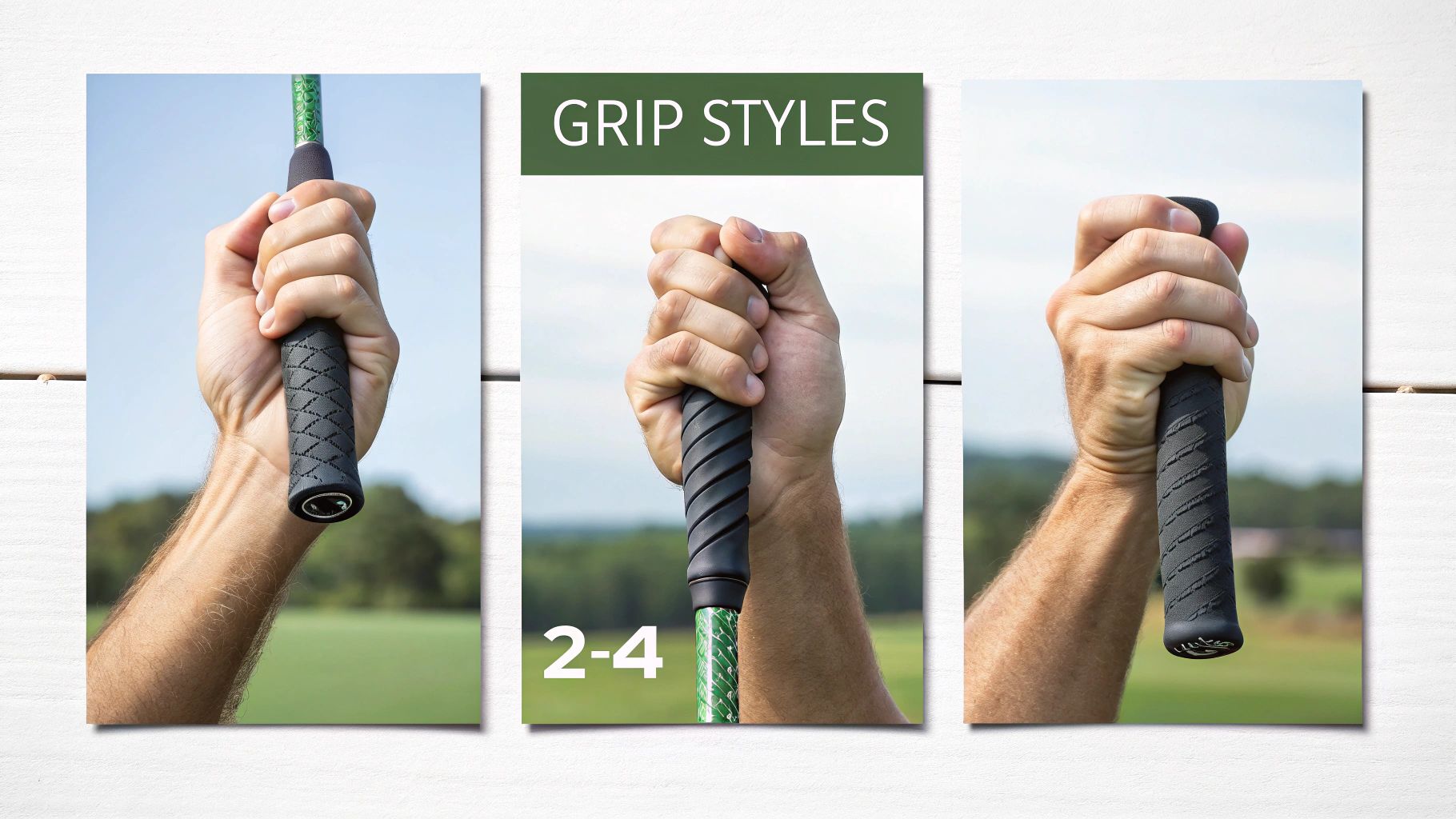
Before you even think about materials or sizes, you have to answer a fundamental question: how are you actually going to hold the club? Forget about finding the one “correct” way—it doesn’t exist. This is about discovering what feels natural and gives you the best control over the clubface.
Think of your grip style as the foundation of your entire swing. The three main methods—the Vardon (overlap), the interlock, and the ten-finger (baseball)—each create a unique link between your hands. Each has its own feel, its own benefits, and is used by everyone from weekend hackers to legends of the game.
Let’s break them down so you can figure out where you fit.
The Vardon Overlap: The Popular Choice in Golf
Named after the legendary Harry Vardon, this is by far the most common grip in golf. It’s estimated that over 90% of PGA Tour professionals use some version of it. The move is simple: rest the pinky finger of your trail hand (right hand for righties) in the groove between the index and middle fingers of your lead hand.
The result feels like a firm yet natural handshake with the club, uniting your hands into a single unit without feeling forced. This perfect blend of control and feel is exactly why it’s the go-to for so many great players.
This style is particularly great for golfers with average to large hands. By taking the pinky off the club, it helps quiet down an overactive trail hand—often the culprit behind a nasty hook. If you want a tour-proven, reliable starting point, the Vardon is it.
The Interlock Grip: The Unified Connection
The interlock is the second-most popular style, and its champions are two of the biggest names in history: Jack Nicklaus and Tiger Woods. Here, the pinky finger of the trail hand literally hooks, or interlocks, with the index finger of the lead hand.
This creates the strongest possible link between your hands, making them feel like one fused piece. For golfers with smaller hands or anyone who feels their hands separate during the swing, the interlock provides incredible security.
That locked-in feeling isn’t for everyone, though. Some golfers, especially those with larger fingers or arthritis, find it uncomfortable. But for those it clicks with, the stability it provides is second to none.
The way you hold the club sets the stage for your entire swing. A comfortable, secure grip style allows you to release the club with power and precision, while an awkward one creates tension and inconsistency before you even begin your takeaway.
The Ten-Finger Grip: The Power Grip
Often called the “baseball grip,” this one is exactly what it sounds like. All ten fingers are on the club, with your hands touching but not overlapping at all. It’s the most intuitive way to grab something—just like you’d hold a bat.
This style is a game-changer for many beginners, juniors, and players who struggle with hand strength or joint pain. With every finger on the grip, you can often generate more clubhead speed. Its simplicity makes it easy to learn and repeat.
The potential downside? It can encourage the trail hand to get a little too involved, which can lead to inconsistency for more skilled players. However, for those who need to maximize leverage and comfort, this grip is a powerful solution.
Matching Grip Material to Your Playing Style in Golf
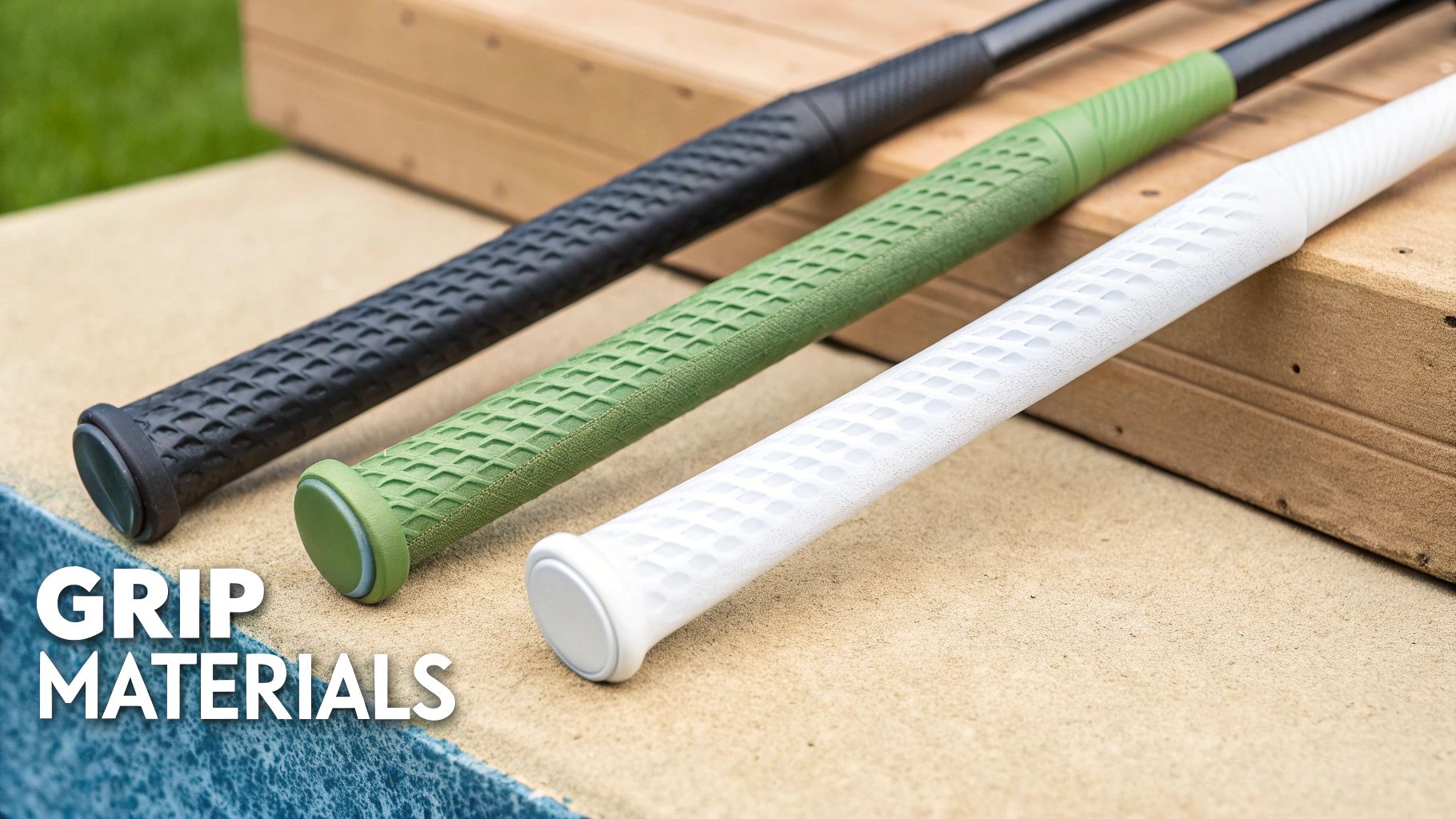
If your grip style is the foundation, then the grip material is the surface you’re standing on. This is what determines the feel, the tackiness, and the feedback you get from every shot. The material is just as personal as the club it’s on, and it has a huge impact on your confidence and control.
Think of golf grips like car tires. Some are all-season workhorses built for reliability. Others are soft performance tires designed for maximum feel on a dry track. Choosing the best golf grip material isn’t about what’s trendy; it’s about matching the “tread” to your hands and the conditions you play in.
Let’s dig into the most common materials to find the perfect match for your game.
Classic Rubber Grips: The All-Around Performer
The standard rubber grip is the most popular for a reason—it’s a fantastic all-rounder. It’s durable, versatile, and provides a comfortable, consistent feel for a huge range of golfers. These grips, usually made from proprietary rubber blends, strike a great balance between tackiness and firmness.
They are the reliable workhorses of the grip world. While they might not have the specialized features of other types, their solid, predictable performance makes them the perfect starting point for most players.
Corded Grips: Maximum Traction in Any Weather
If you play in humid, rainy climates or just have sweaty hands, corded grips are your best friend. Period. These grips have a cotton cord material woven right into the rubber, creating a much rougher, almost raspy texture.
That cord acts like tire treads in the rain, channeling moisture away from your hands and giving you an unshakable connection to the club when things get slick. The trade-off is a much firmer feel that can be a bit abrasive for some. But if you demand maximum grip security, nothing beats cord.
Your grip’s material is the first line of defense against the elements and physical discomfort. Selecting the right one transforms the club from a tool you simply hold into a natural extension of your hands.
Hybrid Grips: The Best of Both Worlds
Can’t decide between the lockdown feel of cord and the soft comfort of rubber? That’s exactly why hybrid grips were created. These clever designs strategically place different materials in different zones.
Typically, you’ll find cord on the upper half where your gloved hand sits, giving you that awesome traction. The lower section, where your bare hand rests, is made from a softer rubber for better feel on delicate shots. It’s aggressive traction where you need it and soft feedback where you want it.
Polymer and Synthetic Grips: Comfort and Vibration Dampening
For any golfer who puts comfort first, modern polymer and synthetic grips are a revelation. These materials are engineered to be incredibly soft, tacky, and amazing at absorbing the harsh vibrations that shoot up the shaft on mishits.
This makes them an ideal choice for players with arthritis, joint pain, or sensitive hands. The shock-dampening can seriously reduce fatigue over 18 holes. While some elite players feel these super-soft grips mute a bit of feedback, the comfort they provide is a massive win for most golfers, helping them hold the club with lighter, more relaxed pressure.
How to Find Your Perfect Golf Grip Size
Okay, we’ve talked styles and materials. Now for what might be the single most important—and most overlooked—part of the equation: grip size.
Using the wrong size grip is like wearing running shoes that don’t fit. Sure, you can still run, but you’ll be uncomfortable, inefficient, and asking for trouble. An ill-fitting grip is a silent killer for a good golf swing, introducing major flaws without you even realizing it.
A grip that’s too small lets your hands and fingers get too active. This leads to that dreaded “flippy” release where you shut the clubface too fast, causing pulls and hooks. A grip that’s too large, on the other hand, restricts your hands from releasing the club naturally, leaving the clubface open at impact. Hello, slice. Goodbye, power.
A Simple Test You Can Do Right Now
Before you grab a ruler, here’s a quick check you can do with your current clubs.
Take your normal top-hand grip (your left hand if you’re a righty). Look at your middle and ring fingers. Are they touching the pad of your thumb?
- If your fingertips are digging hard into your palm, your grip is likely too small.
- If they are just barely touching your thumb pad, you’re probably in the right ballpark.
- If there’s a noticeable gap between your fingertips and your thumb pad, your grip is almost definitely too large.
This little test gives you a great starting point and tells you if you’re on the right track.
Measuring for a Perfect Fit
For a more precise approach, all you need is a ruler. This is the same method club fitters use to get a baseline measurement, and it removes the guesswork. Getting these fundamentals right is why any good golf club fitting guide starts with simple steps like this.
Here’s all you have to do:
- Lay your top hand (left for righties) flat with your fingers together.
- Measure from the main crease at the base of your wrist to the very tip of your middle finger.
- Jot that number down. That one measurement is a surprisingly accurate indicator of your ideal grip size.
Finding the right grip size isn’t just about comfort. It’s about creating a neutral, tension-free connection to the club that allows your swing to work properly. It’s one of the cheapest and easiest ways to see real improvement in your ball flight.
Now, take your measurement and see where it lands on this chart.
Grip Size Measurement Guide
This table is a fantastic reference for matching your hand measurements to the right grip size.
| Glove Size | Longest Finger Measurement | Recommended Grip Size |
|---|---|---|
| Men’s S / Ladies’ L | Up to 7.00″ | Undersize |
| Men’s M / Men’s ML | 7.00″ to 8.25″ | Standard |
| Men’s L | 8.25″ to 9.25″ | Midsize |
| Men’s XL / Men’s XXL | 9.25″ and up | Jumbo (Oversize) |
Keep in mind, this chart is a starting point, not the final word. Personal preference still matters. If you find yourself between two sizes, the common wisdom is to try the larger size first. A huge number of amateurs play with grips that are too small without knowing it, and going a size up can be a game-changer.
Tailoring Your Grips for Specific Needs in Golf
A “standard” golf grip is a bit of a myth. Your game isn’t standard, and your grips shouldn’t be either. The right grip can solve a problem before you even take the club back.
Think about it. A golfer battling arthritis has completely different needs than a junior just learning the game. Matching your grips to your specific challenges is one of the easiest ways to build more comfort, confidence, and a better connection to the club.
Grips for Golfers with Arthritis or Joint Pain
If you’re dealing with arthritis, every swing can send a nasty shockwave up your arms. The goal here is simple: find a grip that absorbs that vibration. This is where Jumbo (or Oversize) grips are an absolute game-changer.
Their larger diameter means you can hold the club securely with far less pressure, taking a ton of strain off your finger and wrist joints. Look for grips made from soft, shock-dampening materials like specialized polymers or cushiony rubber compounds. They act like a pillow for your hands, making the game a whole lot more enjoyable.
Solutions for Sweaty Hands or Humid Conditions
There’s no worse feeling than the club slipping right at the top of your swing. If you struggle with sweaty hands or play in soupy humidity, grip security is everything. In this fight, corded or hybrid grips are the undisputed champions.
The cotton cord woven into the rubber creates an aggressive, textured surface that just won’t slip. It actively channels moisture away and gives you maximum traction when you need it most. If a full-cord grip feels too abrasive, a hybrid model is the perfect middle ground, giving you a locked-in cord feel for your top hand and softer rubber on the bottom.
This flowchart nails down why getting the size right is so critical—it can directly cause the misses you’re trying to fix.
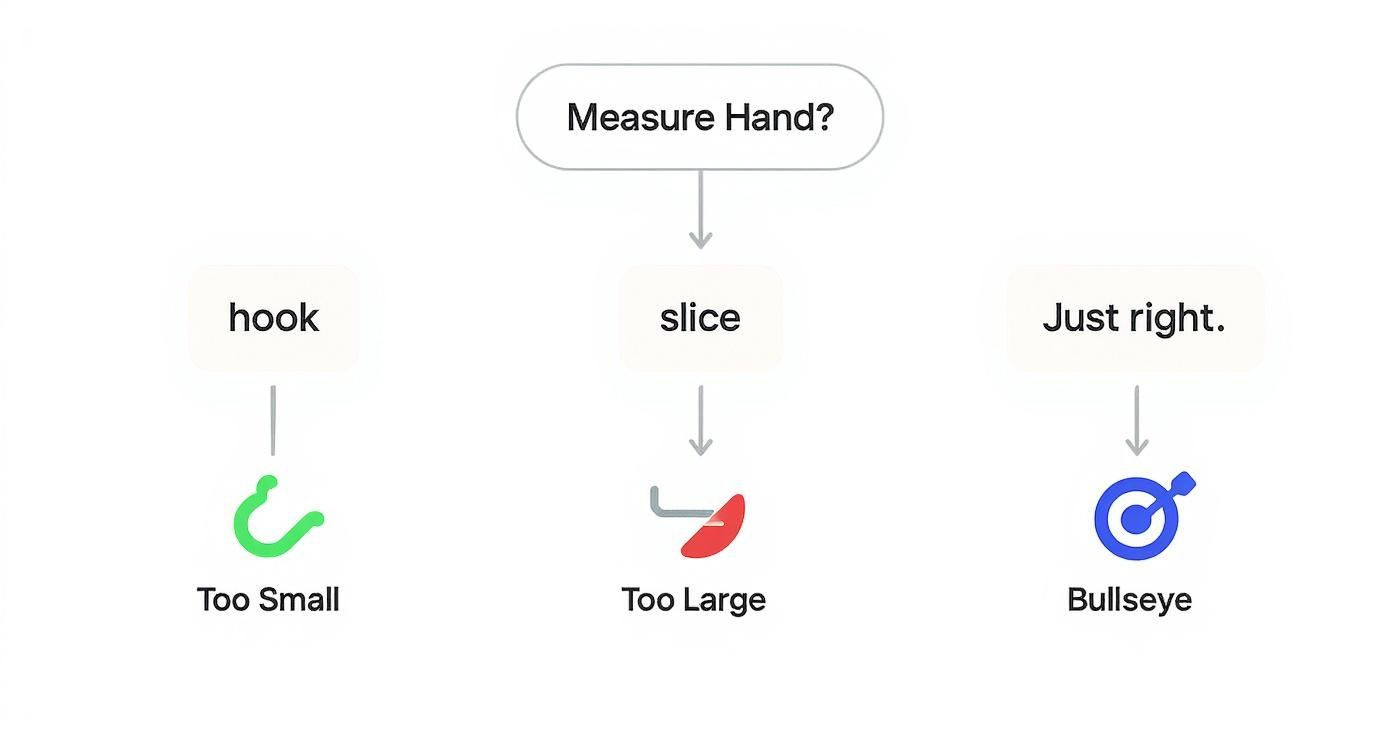
As you can see, a grip that’s too small often lets the hands get too flippy, leading to a hook. On the flip side, one that’s too big can stop your hands from releasing properly, leaving the face open for a slice.
Smart Choices for Senior and Junior Golfers
As we get older, keeping clubhead speed up can feel like an uphill battle. Many senior golfers get a surprising boost by switching to lighter-weight grips. Shaving even a few grams off each grip lowers the club’s total weight and its swingweight. This can make the club feel easier to swing, helping you generate more speed without swinging out of your shoes.
For junior players, the right equipment is everything. A grip that’s too big for their smaller hands will force them into bad habits from the very first lesson. Using properly fitted Undersize grips isn’t just a suggestion; it’s essential. It lets them hold the club correctly, hinge their wrists, and learn how to release the club—setting them up for a lifetime of good golf.
The best golf grip for you is the one that removes a barrier to your performance. Whether that barrier is pain, weather, or a physical limitation, the right grip provides a direct and immediate solution.
When and How to Reggrip Your Golf Clubs
Once you’ve found the perfect grip, the last step is getting it on the club. You can always head to your local pro shop, but learning to reggrip your own clubs is a surprisingly easy and satisfying DIY project. It’s a great way to save money and gain total control over your gear.
Don’t think of it as some complex repair. It’s more like changing a bike tire—a simple mechanical process anyone can learn with a few basic tools and a little patience. Plus, when you do it yourself, you know it’s done exactly right, every single time.
The Simple Steps of Regripping
The whole process can sound intimidating with talk of solvents and double-sided tape, but it’s really just a few logical steps.
- Get the Old Grip Off: Using a hook blade or utility knife, carefully slice the old grip away from your body, starting from the butt end and cutting down toward the clubhead. Once it’s cut, it peels right off.
- Apply the New Tape: After you scrape off any leftover tape residue, stick on a new piece of double-sided grip tape. Run it down the length of the shaft, leaving about a half-inch hanging over the end. Twist that extra bit and tuck it into the shaft opening to create a smooth cap.
- Slide the New Grip On: This is where the magic happens. Douse the inside of the new grip and the outside of the taped shaft with grip solvent. This lubricant makes it easy to slide the new grip smoothly into place.
Once the grip is on, you have a short window to make final adjustments—get it straight, align the logo—before the solvent evaporates and the adhesive locks it down for good.
Key Tips for a Flawless Finish
Want to make your first regripping project a success? A couple of pro tips can make all the difference. The single most helpful tool is a rubber shaft clamp and a simple bench vise. Clamping the club in a vise holds it rock-steady, freeing up both of your hands to work.
Regripping your own clubs is a rite of passage for many serious golfers. It creates a deeper connection to your equipment and gives you the confidence that your most important link to the club is perfectly set up.
Another huge tip: be generous with the grip solvent. A classic rookie mistake is not using enough, which causes the grip to get stuck halfway on—a nightmare to fix. It’s way better to use too much than not enough.
Finally, pay attention to alignment. Most grips have markings or logos meant to be squared up with your clubface. Use them as your guide. After a couple of clubs, you’ll get the feel for it, and the whole process will become second nature.
FAQ’s
You’ve got the basics down, but a few questions always seem to pop up. Don’t worry, you’re not alone. Let’s tackle those common “what ifs” and “should Is” that golfers ask when they start getting serious about their gear.
How often should I actually change my grips?
This is the big one. The go-to rule is to regrip your clubs once a year or after every 40 rounds, whichever comes first. That isn’t a marketing gimmick; it’s a maintenance schedule for a critical piece of equipment.
Grips are made of materials that break down from sweat, oils from your hands, dirt, and UV rays. A fresh grip feels tacky and responsive, while an old one gets hard, shiny, and slick. Once you see that shine, you’ve already lost a significant amount of control.
Can the wrong grip size really affect my ball flight?
Absolutely. It’s one of the most direct links between your gear and your scorecard. The size of your grip has a massive impact on what your hands and wrists can—and can’t—do during your swing.
Here’s the breakdown:
A grip that’s too small lets your hands get overactive. It encourages a “flippy” release where your wrists roll over too quickly, slamming the clubface shut and causing a nasty hook or pull.
A grip that’s too large does the opposite. It restricts your wrist action, making it difficult to release the club naturally. This often leaves the clubface open at impact—a classic recipe for a slice or a push.
Is a professional grip fitting worth it?
For most golfers, the DIY measurements we’ve covered will get you 95% of the way there. But for the serious player or anyone with unique hands (like long fingers and small palms), a professional fitting is a game-changer. A fitter can put you on a launch monitor and show you in real-time how a small change in grip size or texture impacts your clubhead speed, face angle, and shot pattern.
For a player with arthritis or unusually shaped hands, a professional fitting isn’t a luxury. It’s a critical step toward finding a setup that allows for consistency and, just as importantly, comfort on the course.
Should all my clubs have the same grip?
For your irons and woods? Yes, definitely. Consistency is king in golf. Having the exact same grip model and size on every club from your driver down to your wedges creates a uniform feel. This builds confidence because you know exactly what to expect when you pull any club from the bag.
The only exception is the putter. The putting stroke is a completely different motion, which is why putter grips come in a wild variety of shapes, sizes, and textures. For the flatstick, it’s all about what feels best and keeps your hands quiet.
Finding the best golf grip is the first step, and at Golf Inquirer, we’re here to guide you through the rest of your journey on the course. Dive into our expert tips, gear reviews, and course guides to elevate your game. Explore the world of golf with us today.