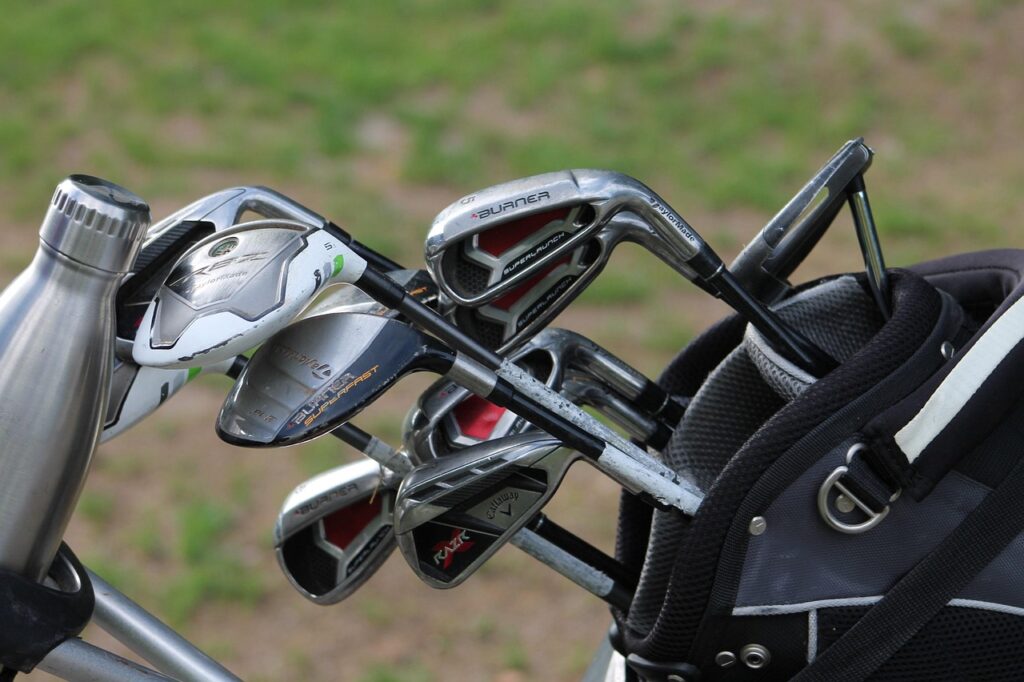
The “best” golf clubs are the ones that match the way you actually deliver the club to the ball, not the ones with the loudest marketing or the longest list of tour sightings. When your golf clubs fit your swing, you tend to launch it higher when you need help, spin it less when you create plenty, and miss the center of the face without getting punished as severely. Learn more about choosing the correct golf clubs here
At Golf Inquirer, we love gear talk, but we love lower scores even more. So let’s frame” best golf clubs” around real swing traits you can recognize in yourself: Swing speed attack angle (steep vs. shallow),and current skill level.
- Start with your golf swing, not the brand
- A practical “best golf clubs” checklist (what matters most)
- Best drivers for your golf swing: speed, loft, and forgiveness
- Golf Irons: choose forgiveness and launch first, then shape
- Golf Wedges: match bounce to divots and turf
- Hybrids, fairway woods, and long irons: pick your “problem solver”
- A simple fit map: what tends to work by swing type in golf
- Adjustability and modern tech: what is actually worth caring about
- “Best” does not always mean newest: smart buying rules for golf clubs
- A quick self-check you can do this week
- FAQ's
Start with your golf swing, not the brand
Two swing details do most of the heavy lifting:
Swing speed: how fast the golf clubhead is moving at impact. Many newer golfers live around the 70 to 85 mph driver range, solid recreational players often sit 90 to 100+, and elite swings can push 110 to 120+.
Attack angle and turf interaction: whether you tend to be steep (deep divots, more downward strike) or shallow (sweeping, brushing the turf).
If you only learn one gear lesson this season, make it this: distance comes from good launch conditions and center contact, and the right club makes both easier to repeat.
A practical “best golf clubs” checklist (what matters most)
It’s tempting to obsess over one thing, usually driver loft or iron model. A better approach is to work through a short checklist that covers the whole system.
Here’s what to prioritize, in order:
- Face contact: forgiveness and stability on mishits
- Launch and spin: enough height to carry, not so much spin that it floats
- Dispersion: a playable pattern you can aim with
- Gapping: consistent yardage steps through the set
- Feel: confidence matters, but it should come after performance
That ordering helps you avoid the classic trap: buying “player” clubs for the feeling, then fighting low launch, short carries, and thin strikes for months.
Best drivers for your golf swing: speed, loft, and forgiveness
Drivers are where fit shows up fastest. One swing with the wrong loft and shaft can feel like you are working twice as hard for half the result.
If you swing on the slower side, you usually need help getting the ball airborne. That often means more loft, a lighter shaft, and a head designed to keep spin and ball speed more consistent across the face.
If you swing fast, you often need help controlling spin and curvature. That can mean a lower loft setting, a more stable shaft profile, and weight placement that keeps spin down without turning every miss into a penalty ball.
A quick guide that holds up well:
- Slower speed (often under 85 mph): higher loft (often 10.5 to 12 degrees), lighter shafts, high MOI heads
- Moderate speed (often 85 to 100 mph): mid loft ranges, neutral weighting, stability that matches your tempo
- Faster speed (often 100+ mph): loft that keeps spin playable, stiffer profiles, tighter face control
Why Golf Equipment Matters for Your Performance
And yes, driver length matters. Many golfers hit a slightly shorter driver straighter, find the center more often, and end up longer in real play.
Golf Irons: choose forgiveness and launch first, then shape
Irons are where golfers most often buy more “club” than they can use. There’s nothing wrong with a compact head, minimal offset, and a thin topline. It just needs to match the strike quality you bring on a typical Saturday, not your best swing on the range.
Most players do better with one of these categories:
Game improvement irons: wider soles, perimeter weighting, more offset, higher launch, more ball speed protection on mishits.
Players distance irons: still offer help with launch and speed, but in a more compact shape with a little more control.
Players irons: smaller heads, less offset, more feedback and shot shaping, less protection on thin or toe strikes.
The “best” iron set is often the one that gets your 6 and 7 iron high enough to land and hold, while keeping your short irons predictable. If your mid irons come out flat and knuckly, you probably need more launch help, not a different swing thought.
Golf Wedges: match bounce to divots and turf
Wedges are not just loft. Bounce and sole shape decide whether you slide through the turf cleanly or dig and stall. Your swing type shows up clearly here.
Steep swingers and players on softer turf usually do better with more bounce, since the leading edge is less likely to dig.
Shallow swingers and players who see firm, tight lies often prefer less bounce, so the club does not “skip” into the ball.
A wedge setup also needs simple gapping. Many golfers like 4 to 6 degrees of loft difference between wedges, but the right spacing depends on how far you hit partial shots and how often you manipulate face angle.
Hybrids, fairway woods, and long irons: pick your “problem solver”
Long clubs are where confidence can swing a scorecard. A hybrid that flies high and lands soft can save you on long par 3s, second shots on par 5s, and punch-outs that still need carry.
Fairway woods can be great off the tee and from the deck, but they reward a strike that is not too steep. If you take deep divots with a 3 wood, a higher-lofted fairway wood (5 wood or 7 wood) or a hybrid often becomes the better “best club” choice.
If you love long irons and hit them solid, keep them. If you fear them, you do not need to suffer. Modern hybrids and higher-lofted fairway woods are built to launch.
A simple fit map: what tends to work by swing type in golf
This table is a starting point, not a rulebook. It can help you walk into a shop, a fitting bay, or a used-club search with a smarter filter.
| Your swing profile | Driver setup that often works | Iron style that often works | Wedge bounce tendency |
|---|---|---|---|
| Slower speed, developing contact | Higher loft, high MOI head, lighter shaft, draw-bias only if needed | Game improvement or friendly players distance | Mid to higher bounce if you dig |
| Moderate speed, improving consistency | Adjustable loft, stable midweight shaft, neutral weighting | Players distance or mid cavity-back | Mid bounce as a baseline |
| Fast speed, repeatable strike | Loft that controls spin, stable stiff profile, weight that matches your miss | Players distance to players irons depending on strike | Bounce matched tightly to turf and delivery |
| Steep attack, big divots | Loft that helps launch, forgiveness that protects low strikes | Wider soles and helpful turf interaction | Higher bounce, more sole relief options |
| Shallow attack, sweeper | Loft that keeps spin playable, avoid overly spinny heads | Neutral sole designs, not too wide | Lower to mid bounce for tight lies |
If you are not sure where you fit, your divots and your typical ball flight are strong clues.
Adjustability and modern tech: what is actually worth caring about
Modern clubs are packed with movable weights, adjustable hosels, multi-material heads, and face designs built to keep ball speed up. The good news is that these features can help a lot. The tricky part is knowing what problem you are solving.
Adjustability is most valuable when it helps you:
- Dial loft and face angle: to tighten launch and start line
- Shift weighting: to reduce a slice or calm a hook without changing your swing mid-round
- Tune spin: to stop ballooning shots or low bullets that fall out of the air
If you change settings every range session, you can end up chasing your tail. Pick a goal, test it, and stay with it long enough to learn what the club wants to do.
“Best” does not always mean newest: smart buying rules for golf clubs
You can play great golf with clubs that are a few model years old, especially if the fit is right. A well-chosen used driver with the correct loft and shaft can beat a brand-new driver that fights your timing.
Before you buy, set a plan for how you will validate the choice:
- Hit it on a launch monitor if possible, but also watch real ball flight outdoors when you can.
- Compare dispersion, not your single best shot.
- Check gapping through the bag, especially at the top end and in wedges.
A fitting can be a big help, even if you end up buying something more budget-friendly. The goal is to learn your specs and tendencies, then shop with clarity.
A quick self-check you can do this week
If you want a simple way to point yourself toward the “best clubs for your swing” without getting lost in the details, start here:
- Typical miss with the driver: right, left, or low on the face
- Divot pattern: deep and forward (steep) or shallow and brushy (shallow)
- Longest iron you trust: the club that tells you whether you need a hybrid or higher-lofted wood
- 7 iron peak height: high enough to hold greens, or flat and running
- Wedge strike: digging, bouncing, or clean and neutral
Answer those honestly and you will shop faster, test smarter, and build a bag that supports the swing you bring to the course.
If you tell a playing partner “these are the best clubs,” what you really mean is: they make your common swing produce a playable shot more often. That’s the standard worth chasing, and it’s available at every handicap level.
FAQ’s
What golf clubs are best for a slow swing speed (under 85 mph)?
Golfers with slower swing speeds need help getting the ball airborne to maximize carry distance. Look for senior (A-flex) or ladies (L-flex) graphite shafts, which are lighter and bend more easily to generate clubhead speed. Pair these with higher-lofted drivers (12° or more), fairway woods, and hybrids instead of traditional long irons.
Which clubs fit a moderate swing speed (85–95 mph)?
This is the average range for most amateur golfers, where balancing distance and control is key. Regular (R-flex) shafts work best here, paired with mid-lofted drivers (around 10° to 12°). Cavity-back or game-improvement irons with perimeter weighting help keep off-center hits flying straight while maintaining solid distance.
What equipment should fast swingers (95+ mph) use?
High swing speeds generate plenty of natural power and spin, so the goal is keeping the ball from ballooning or curving offline. You’ll want stiff (S-flex) or extra-stiff (X-flex) steel shafts for tighter dispersion and lower-lofted drivers (8° to 9.5°) to keep launch penetrating. Players-distance or blade-style irons also give faster swingers more feedback and shot-shaping control.
How do you choose clubs if you fight a slice or struggle with consistency?
If your swing path tends to leave the clubface open, look for draw-biased drivers and woods with heel-side weighting that helps square the face at impact. Swapping 3-, 4-, and 5-irons for hybrids makes a huge difference too. Hybrids have a lower center of gravity and wider soles, making it much easier to launch the ball cleanly from the fairway or rough.
At Golf Inquirer, we know it’s these little details that separate good golfers from great ones. Our goal is to give you the kind of insights that not only help you score better but also let you enjoy the game more. To keep learning, explore more tips and guides at https://golfinquirer.com.