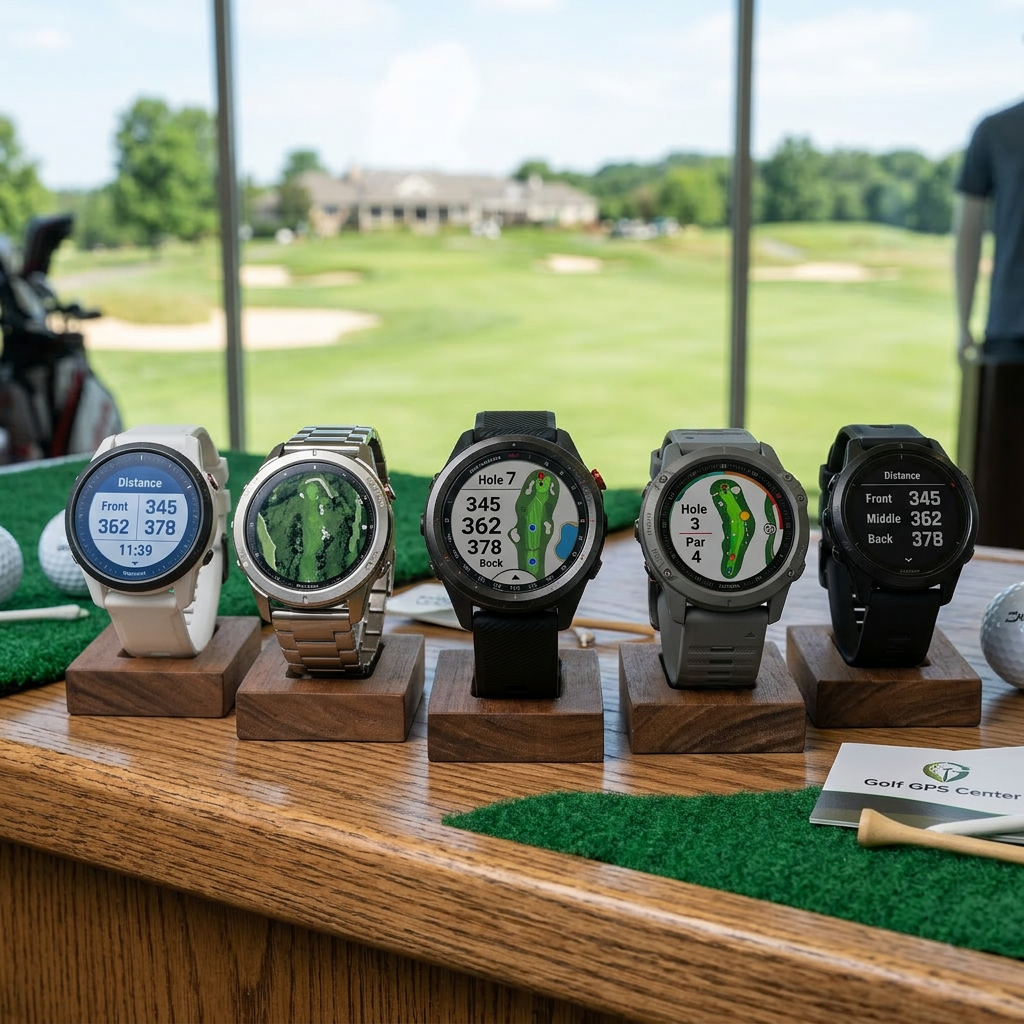
A good golf GPS watch does two things at once: it gives you numbers you can trust, and it gets out of your way so you can stay committed over the ball. The best golf GPS watches are clearer, faster, and more “golf-first” than ever, with brighter screens, better mapping, and smarter distance features that reduce second-guessing.
At Golf Inquirer, we love gear that helps you play with more confidence, not more clutter. Below is a practical guide to the top golf GPS watches people are buying this year, plus how to choose the right one for your game and budget.
Explore our selection of the best golf GPS watches that enhance your game and offer reliable performance.
Why Choose the Best Golf GPS Watches for Your Game?
- Why Choose the Best Golf GPS Watches for Your Game?
- What matters most in a Golf GPS watch (and what to ignore)
- The top Golf GPS watches to know in 2026
- Quick comparison table (so you can narrow it down fast)
- How to choose the right GPS Golf Watch for your Game
- Watch GPS vs rangefinder: when each wins
- Getting better numbers from any Golf GPS watch
- Small notes on Golf GPS Watch Screen Types and why they feel different
- A smart way to spend your money on a Golf GPS Watch
- FAQ's
What matters most in a Golf GPS watch (and what to ignore)
A watch can be packed with features and still feel slow on the tee box. The sweet spot is a watch that locks onto GPS quickly, shows front/middle/back at a glance, and makes hazards simple to check when you actually need them.
After you’ve used a GPS watch for a few rounds, you’ll notice that certain features change your decision-making more than others.
Here are the few that tend to matter on real golf days:
- Distance stability: Consistent yardages that do not jump around when you shift your stance.
- Screen readability: Bright, glanceable numbers in full sun and while wearing sunglasses.
- Hole mapping quality: Clear visuals that help you pick conservative targets and avoid short-siding.
- Battery confidence: Enough GPS time for 36 holes, or at least a full day including warmup.
- Shot tracking (optional): Great for improvement, but only if you will actually review the data.
And here’s what many golfers can safely de-prioritize: step counts, app notifications, and a long list of smartwatch widgets you never use on the course.
The top Golf GPS watches to know in 2026
There is no single “best” watch for everyone. The best watch for you is the one you will glance at, trust, and use every hole.
The picks below reflect broad reviewer consensus, current model availability, and feature sets that match how most golfers play and practice.
Garmin Approach S70 (best overall premium pick)
If you want the most complete golf experience on your wrist right now, this is the one that keeps showing up at the top of shortlists. The headline feature is the bright AMOLED display (in two sizes), which makes yardages and maps easy to read even on harsh summer afternoons.
Accuracy is a big part of why the S70 sits at the high end. Multi-band GNSS helps in tricky environments, and Garmin’s course library is massive. On-course features like “PlaysLike” (slope-adjusted yardage) and a Virtual Caddie style recommendation system are attractive if you enjoy strategy support and tend to second-guess club choice.
It is also a strong travel companion for golf trips: long GPS battery life, sturdy build, and course support that rarely leaves you stranded.
One sentence reality check: it’s premium-priced, and you’ll pay for the screen and the deeper feature set.
Garmin Approach S12 (best budget-friendly Garmin)
The S12 is proof that “budget” does not have to mean “barebones.” It focuses on core golf jobs: distances, simple hazard info, and straightforward scoring, with a sunlight-readable MIP display that works well outdoors.
If you want a watch that feels light, runs for a long time in GPS mode, and stays simple enough that you never open a manual, the S12 is a great fit. You miss out on some advanced sensors and the flashy AMOLED look, but you get a very usable golf tool at a friendlier price.
This is also a smart choice for golfers who already use the Garmin Golf app and want easy syncing without upgrading to a premium watch.
Shot Scope V5 (best for shot tracking and stats value)
The Shot Scope V5 is built for golfers who want to learn from their rounds, not just survive them. The standout is the included club-tag system and automatic shot detection, which can create a detailed picture of how you actually play: distances by club, tendencies, and where strokes are leaking.
It also keeps the on-course experience simple. Button control (no touchscreen) can be a plus when your hands are sweaty, it’s raining, or you just want reliability.
If your main goal is game improvement through data, the V5 is one of the strongest “watch plus tracking system” values because the tags are part of the package.
Bushnell ION Elite (best value under about $200)
If your priority is “give me accurate yardages and a clear map without spending much,” Bushnell’s ION Elite hits a very friendly middle ground. You get full-color hole views, hazard distances, scoring, and a slope-adjusted distance feature in a watch that stays focused on golf.
Battery life is more modest than some competitors, but it is generally enough for two rounds for many players. The bigger appeal is the value: it covers the essentials without pushing you into premium pricing.
This is a great watch for the practical golfer who wants to stop guessing and start aiming.
TAG Heuer Connected Calibre E4 Golf Edition (best luxury design)
Some golfers want their golf watch to look and feel like a luxury timepiece, not a plastic sports device. That’s where the TAG Heuer Golf Edition stands out, pairing an elegant titanium build with a responsive touchscreen and detailed course views.
Wear OS brings flexibility, but it can also bring shorter battery life than golf-dedicated watches. If you love premium materials and a modern smartwatch feel, it can be a fun choice. If you want multi-round battery and a strictly golf-first ecosystem, a dedicated golf watch may be a better fit.
This is less about value and more about experience.
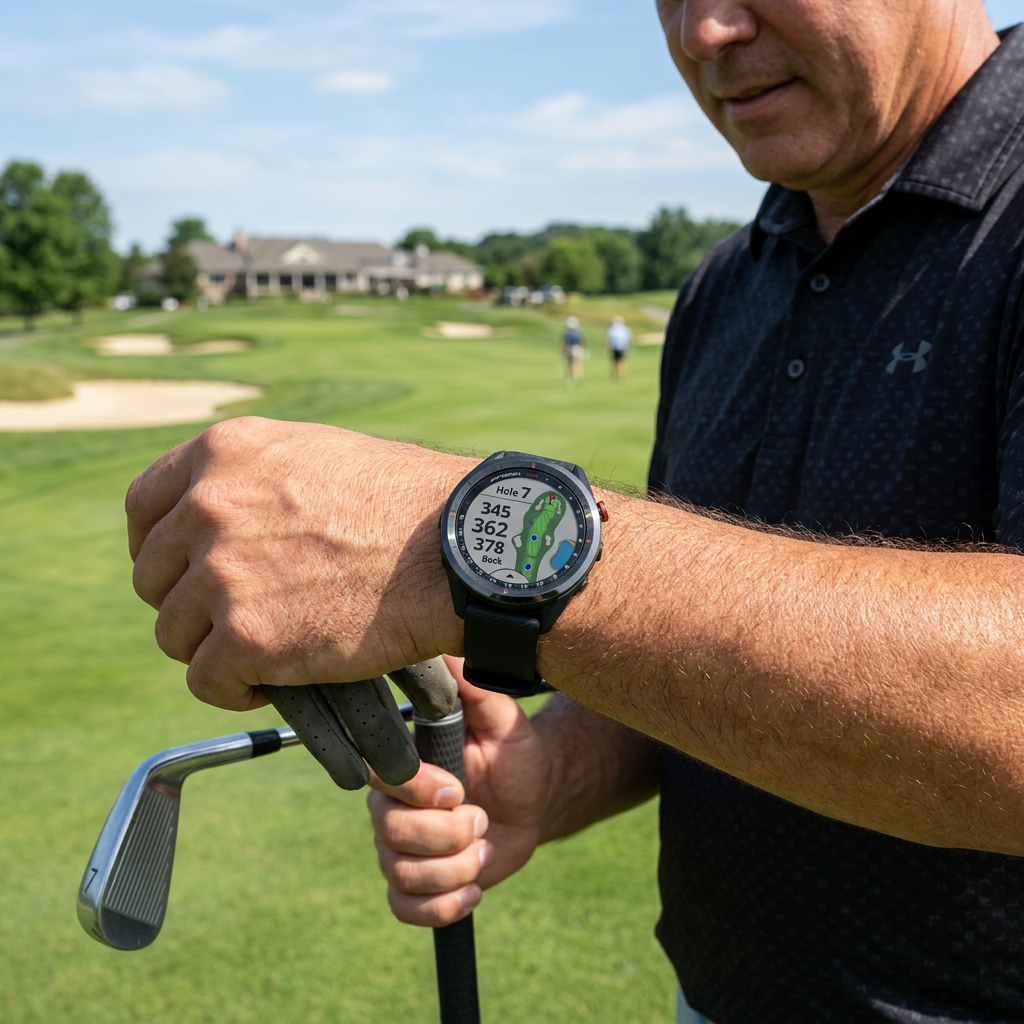
Quick comparison table (so you can narrow it down fast)
The specs below reflect commonly listed manufacturer data and widely reported performance ranges from established reviewers.
| Watch | Best for | Display | Courses (approx.) | Shot tracking | Notable strengths | Typical GPS battery |
|---|---|---|---|---|---|---|
| Garmin Approach S70 | Premium “do-it-all” | AMOLED | 43,000+ | Yes | Multi-band GNSS, PlaysLike, Virtual Caddie style help | Up to ~20 hours |
| Garmin Approach S12 | Simple and affordable | MIP | 42,000+ | No | Lightweight, easy menus, long GPS runtime | ~30 hours |
| Shot Scope V5 | Stats and club tracking | MIP | 36,000+ | Yes (with tags) | Tags included, strong analysis tools, button reliability | Often 2+ rounds |
| Bushnell ION Elite | Best value | Color LCD | 38,000+ | No | Slope-adjusted distances, simple golf UI | Often ~2 rounds |
| TAG Heuer E4 Golf | Luxury smartwatch feel | AMOLED | 40,000+ | Basic | Premium build, responsive touch experience | Often under a full day |
How to choose the right GPS Golf Watch for your Game
If you buy the watch that matches your habits, you’ll use it every round. If you buy the watch that matches someone else’s habits, it might sit in a drawer after a month.
Think about how you play when you are at your best: quick decisions, a clear target, and a committed swing.
A helpful way to decide is to pick your “main reason” for wearing a watch:
- Distance confidence: Garmin S12 or Bushnell ION Elite.
- Course management help: Garmin S70, especially if you like map views and PlaysLike-style guidance.
- Serious post-round stats: Shot Scope V5 with its included club tags.
- Luxury and everyday wear: TAG Heuer E4 Golf Edition.
Also consider how your home course is set up. If you play tight tree-lined holes where GPS can drift, better GNSS tech and stable readings become more valuable. If you play wide-open layouts, nearly any modern watch will be “good enough,” so screen clarity and ease of use may matter more than raw GPS specs.
Watch GPS vs rangefinder: when each wins
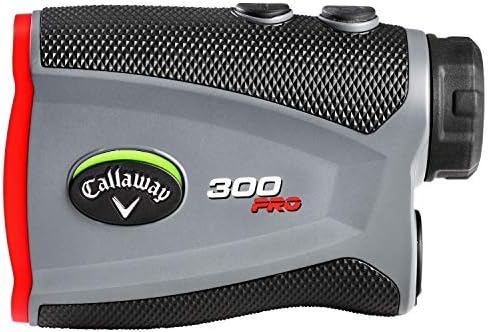
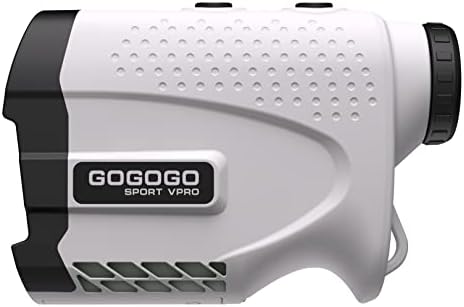
A rangefinder is strongest for precision to a visible target: pins, bunker lips, a tree at the corner of a dogleg. Many golfers carry both, using GPS for big-picture strategy and a laser when they want an exact flag number. Learn more about GPS Watch vs. Rangefinder here
If you’re picking just one device, ask yourself a simple question: do you lose more strokes from poor strategy or poor distance precision? A watch tends to help strategy immediately, especially for newer golfers and improving players.
Getting better numbers from any Golf GPS watch
Even the best watch can feel “off” if it’s set up poorly or used inconsistently. Small habits make a big difference.
Wear your watch on the same wrist every round, keep it snug (not tight), and give it a moment to settle at the first tee so it can lock onto satellites cleanly. If your watch supports it, confirm the course and tees before you hit.
Here’s a quick pre-round routine many golfers find useful:
- Start GPS mode while you are on the practice green or near the clubhouse.
- Confirm the correct course and tee box.
- Check that front/middle/back numbers look reasonable on hole 1.
- Decide how you will track score (watch, app, or not at all).
- If you track shots, commit to tagging every club or none that day, not a mix.
That last point saves a lot of frustration. Partial data tends to create misleading stats.
Small notes on Golf GPS Watch Screen Types and why they feel different
You’ll see two main screen styles in golf watches.
AMOLED screens look gorgeous, with deep contrast and vivid colors. They are also excellent for detailed maps. The tradeoff is often battery life, though premium golf models have improved a lot.
MIP (transflective) screens are made for outdoor readability and efficiency. They can look less flashy indoors, yet they are extremely practical on the course, especially for golfers who want a quick glance and minimal fuss.
If you play a lot of bright midday golf, both can work well. What matters is the quality of the panel and the size of the key yardage numbers.
A smart way to spend your money on a Golf GPS Watch
If you are buying your first GPS watch, a simpler model with great battery life often leads to the happiest long-term ownership. You will learn what you actually use: front/middle/back, hazard carries, layup numbers, and scoring.
If you already know you love data and you review your rounds, the Shot Scope V5 style package can be a real turning point. If you love premium screens and want a watch that feels like a high-end golf computer on your wrist, the Garmin S70 is the flagship many golfers have been waiting for.
And if you just want to play faster, aim smarter, and stop pacing off sprinkler heads, even a value pick can change your experience on the course the very first weekend you wear it.
FAQ’s
How accurate are golf GPS watches compared to laser rangefinders?
While laser rangefinders are accurate to within 1 yard by shooting a laser directly at the flagstick, modern golf GPS watches are accurate to within 3 to 5 yards of the target.
The main distinction is what they are measuring. A rangefinder gives you the exact distance to the pin, whereas a GPS watch provides instant, hands-free yardages to the front, center, and back of the green, as well as key hazards (bunkers and water). This makes GPS watches incredibly valuable for strategic course management and handling blind shots where the flag isn’t visible.
Do golf GPS watches require a paid subscription or internet connection on the course?
Generally, no. Most dedicated golf GPS watches (like the Garmin Approach series or Bushnell iON models) come preloaded with tens of thousands of global courses right out of the box. They utilize direct satellite connectivity to track your location on the course, so you do not need a cellular data plan or an active internet connection while playing.
Note: While course access and basic yardages are free, some premium features—such as live wind data, advanced green contour mapping (showing slopes), or deep historical stat tracking—may require a brand-specific premium membership or app subscription.
What is the difference between standard yardage and “PlaysLike” or “Slope” distance?
Standard yardage is the raw, flat, line-of-sight distance from your wrist to the green. “PlaysLike” (or Slope) distance uses an internal barometer and GPS data to calculate how uphill or downhill the shot is, automatically adjusting the yardage.
For example, if you are 150 yards away but hitting to an elevated green, a watch with slope technology might tell you the shot actually “plays like” 162 yards, prompting you to club up.
How long does the battery typically last on a golf GPS watch?
Battery life varies significantly depending on whether the watch is in standard smartwatch mode or active GPS tracking mode:
In Golf/GPS Mode: Most modern golf watches will last between 15 to 30 hours on a single charge. This equates to roughly 2 to 3 full rounds of golf before needing a plug.
In Smartwatch Mode: If you are just using it for daily wear, fitness tracking, and timekeeping without the GPS engaged, the battery can easily last anywhere from 7 to 14 days depending on the display type (e.g., standard monochrome vs. power-hungry AMOLED screens).
Here at Golf Inquirer, our mission is to provide clear, practical advice that helps you play better golf and have more fun doing it. For more in-depth guides, honest gear reviews, and tips to fuel your passion, visit us at https://golfinquirer.com.