Thinking about how to get into golf? It’s a lot easier and more fun than you might think. Forget the old image of stuffy country clubs—your journey can start at a local driving range, a lively Topgolf, or even a high-tech indoor simulator. These spots are perfect for getting a feel for the game without the pressure of a full 18-hole round. Learning how to get into golf is simpler than ever. For new players, patience is crucial when learning how to get into golf; progress may take time. When considering how to get into golf, remember that the first step can be as simple as visiting a nearby driving range or joining a local golf clinic.
Your First Steps Into the World of Golf
Let’s clear the air: golf isn’t some exclusive, impossible-to-learn sport anymore. The game has thrown its doors wide open, welcoming newcomers from all walks of life to grab a club and see what the fuss is all about. And you don’t have to start on some pristine, championship-level course. In fact, most people don’t. Eventually, you’ll find that learning how to get into golf can lead to lasting friendships and experiences.
This isn’t just a feeling; it’s a massive global shift. Golf is booming, with over 108 million people playing worldwide. But here’s the key takeaway for a beginner like you: non-traditional golf is leading the charge. More people are now hitting balls at driving ranges and simulators than on actual 18-hole courses. There’s never been a better, more relaxed time to learn the game. You can dive deeper into the latest global golf participation trends here.
Embracing the Golf Beginner’s Mindset
The single most important thing you can do right now is just decide to try. Ditch any fears about not being “good enough.” Every golfer you’ve ever seen on TV—yes, even the pros—started exactly where you are: with a very first swing. If you’re eager to learn how to get into golf, don’t hesitate to reach out for advice and support.
Keep your initial goals super simple and focused on one thing: having fun.
- Just make contact. Seriously. Don’t worry about how far the ball goes or in what direction. Your only job is to feel the club connect with the ball. That’s a win.
- Have a good time. Grab a friend, enjoy being outside, and celebrate the shots that feel good. Laughing off the bad ones is a mandatory part of learning.
- Be patient with yourself. Golf is a journey, not a sprint. Some days you’ll feel like a natural, and other days you’ll wonder if you’re holding the club right. That’s completely normal.
The best part about starting golf today is that the game is meeting you halfway. Dress codes are more relaxed at public courses, and entertainment spots have made learning a blast. That first pure, soaring shot is just around the corner, waiting for you.
To help you get started without feeling lost, here’s a simple roadmap for your first month. This isn’t about becoming a pro overnight; it’s about building a foundation and enjoying the process.
Your First 30 Days in Golf: A Simple Plan
| Week | Primary Focus | Suggested Activity |
|---|---|---|
| Week 1 | Discovery & Fun | Visit a driving range or Topgolf with a friend. Rent clubs and just focus on hitting the ball. No pressure, just pure fun. |
| Week 2 | Basic Grip & Stance | Watch a few reputable YouTube videos on the basic golf grip and setup. Spend an hour at the range trying to get comfortable with it. |
| Week 3 | Putting & Chipping | Find a local course with a practice green (many are free to use). Spend an hour putting and hitting small chip shots. This builds feel. |
| Week 4 | First Lesson | Book a 30-minute introductory lesson with a local PGA professional. Getting expert feedback early on is a game-changer. |
This plan keeps things manageable and builds momentum. By the end of the month, you’ll have a solid grasp of the basics and, most importantly, you’ll know if golf is the right game for you.
Choosing Your First Set of Golf Clubs
Finding the right clubs is also a key aspect of how to get into golf effectively. Walking into a golf shop for the first time can feel a little overwhelming. You’re hit with rows of shiny, expensive-looking clubs, and it’s easy to feel like you don’t know where to even start. But here’s a little secret from someone who’s been there: you don’t need a top-of-the-line, 14-club set to get out there and start having fun.
Getting your first set of clubs should be an exciting milestone, not a source of stress. The main goal is simple: find clubs that are forgiving and help you build some confidence right out of the gate. For most new players, that means choosing between a complete beginner “box set” or hunting down a quality used set. Both are fantastic ways to get into the game without breaking the bank.
To give you a better idea of how to approach this, here’s a visual guide that breaks down your first move based on what you want to get out of the game.
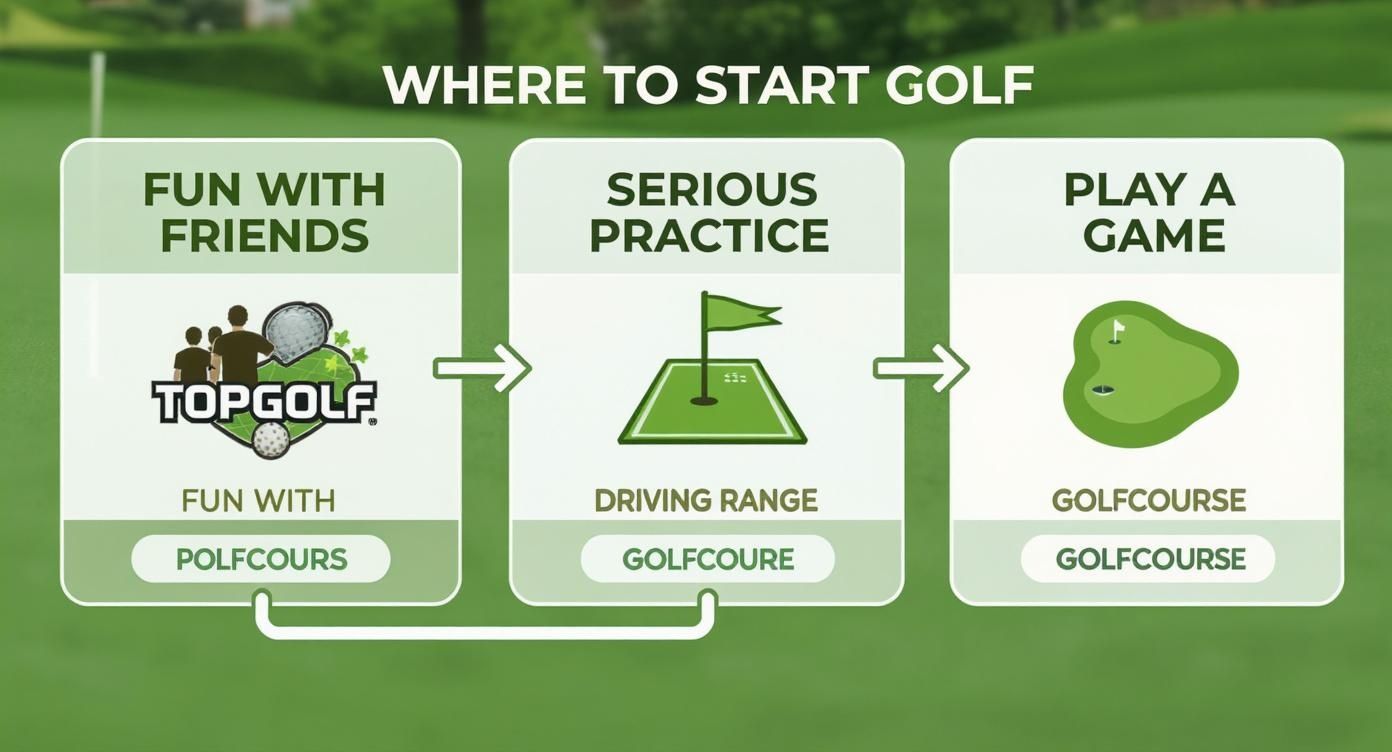
As you can see, whether you’re just looking to have a good time with friends, get serious about practice, or jump right onto the course will shape what gear you need.
What to Look For in Beginner Golf Clubs
When you’re just starting, the one word you need to remember is forgiveness. Forgiving clubs are designed specifically to help minimize the damage from a less-than-perfect swing—and let’s be honest, you’ll have plenty of those at first! A forgiving club helps your mishits go straighter and farther than they otherwise would, which is a massive confidence booster.
Here are the key features to look for:
- Cavity-Back Irons: These irons have a hollowed-out area on the back of the clubhead. This design pushes weight to the outside edges of the club, making it far more stable on off-center hits. They’re a world away from the sleek “blades” the pros use, and that’s a good thing for you.
- Larger Clubheads: On your driver and woods, a bigger clubface means a bigger “sweet spot.” It gives you more room for error, plain and simple.
- Graphite Shafts: Especially in your longer clubs, graphite shafts are lighter than steel. This can help you swing the club a bit faster without having to exert a ton of effort.
I see so many beginners make the mistake of buying clubs that are way too advanced for them. Starting with forgiving, cavity-back irons and a big-faced driver will make the learning curve so much less frustrating. You’ll see progress faster and, most importantly, have a lot more fun.
The Essential Golf Clubs You Actually Need
A full USGA-conforming set has 14 clubs, but you really only need a handful to get started. In fact, a “half set” is perfect for your first few months. It’s more than enough to learn the game and makes your bag a whole lot lighter to carry around.
Think of it as your starter pack. It should include:
- A Driver: This is your big stick. You’ll use it off the tee to hit the ball as far as you can.
- A Mid-Iron (like a 7-iron): A super versatile club you’ll use for all sorts of shots from the fairway.
- A Pitching Wedge: Your go-to for shorter shots into the green and little chip shots right around it.
- A Putter: This will be the most-used club in your bag. It’s for rolling the ball into the hole once you’re on the green.
With just those four clubs, you can handle a driving range, a par-3 course, or even a full 18 holes. You can always fill in the gaps with hybrids and other irons as your game develops. For a more detailed look at specific models, check out our guide on the best golf clubs for beginners, which has some great recommendations that follow this exact philosophy.
Building a Solid Foundation for Your Golf Swing
If you want to know how to get into golf, understanding the basics of grip, stance, and swing is essential.

Everyone wants to smash the ball 300 yards off the tee, but the secret to power and consistency isn’t brute force. It’s all about building a solid, repeatable foundation. Before you even think about the flashy parts of the swing, you have to nail the three fundamentals of your setup: the grip, the stance, and the posture.
Think of it like building a house. If you pour a crooked or weak foundation, everything you build on top of it will be unstable. Getting these core elements right from day one will save you countless hours of frustration and help you build a swing that actually works—and lasts.
Mastering Your Grip in Golf
Your hands are your only connection to the golf club. That’s it. How you hold it influences everything, from where the clubface is pointing at impact to how much power you can unleash. A classic beginner mistake is grabbing the club deep in the palms and strangling it like a baseball bat.
Instead, you want the club to rest mostly in the fingers of your lead hand (your left hand, if you’re a righty). This simple change promotes the proper wrist action you need for speed and control.
There are three main styles you’ll see out there:
- The 10-Finger (or Baseball) Grip: Just like it sounds, all ten fingers are on the club. It’s super simple and often feels the most natural for absolute beginners.
- The Interlocking Grip: This is where the pinky finger of your trail hand hooks between the index and middle fingers of your lead hand. It’s a popular one, used by legends like Tiger Woods.
- The Vardon (or Overlap) Grip: Here, the pinky finger of your trail hand just rests on top of the gap between the index and middle fingers of your lead hand. This is the most common grip among pro golfers.
Don’t just pick one because a pro uses it. Try all three and see which one feels the most comfortable and secure in your hands. The goal is a “neutral” grip, where the “V’s” created by your thumbs and index fingers on both hands point roughly toward your trail shoulder.
Creating a Stable Stance and Athletic Posture in Golf
Okay, grip is set. Now it’s time to build your base. A good golf stance is all about balance and stability, giving you a solid platform to make a powerful turn.
For a standard shot with a mid-iron, get your feet about shoulder-width apart. This anchors you to the ground but still gives you the freedom to rotate your hips and shoulders properly. You want your weight balanced evenly, feeling it centered over the arches of your feet.
From there, it’s all about getting into an athletic posture.
Think about how a shortstop gets ready for a pitch in baseball or how a basketball player guards an opponent. They aren’t standing bolt upright or slouched over. They’re in a ready, athletic position. That’s the exact feeling you want in your golf setup.
Bend from your hips—not your waist—and let your arms hang down naturally from your shoulders. Your knees should have a slight flex, giving you a spring-loaded feeling, ready for action. This setup helps keep your back relatively straight and engages your core. As you start this journey, learning how to prepare your body and avoid common sports injuries is crucial for making golf a lifelong game.
Getting these fundamentals right takes real, conscious effort, especially when you’re just itching to hit the ball. This is where focused, purposeful practice pays off. For more ideas on structuring your time at the range, check out these excellent golf driving range tips that stress quality over quantity. Nailing your setup is the first real step toward learning how to get into golf the right way.
Navigating the Golf Course With Confidence
Understanding course etiquette is another important aspect of how to get into golf seamlessly.

This is it. The moment you step onto the first tee is a huge milestone. All those hours at the driving range have been leading up to this. But let’s be real—it can also be incredibly intimidating. Don’t sweat it. Every single golfer on the planet has felt that exact same way. As you embrace how to get into golf, remember that every golfer started somewhere.
The great news is that golf is booming right now, which means courses are more welcoming to new players than they’ve ever been. In the United States alone, 28.1 million people played on-course golf, continuing a seven-year growth streak. You’re not just starting a new hobby; you’re joining a massive, thriving community that’s excited to have you.
The Unwritten Rules: Golf On-Course Etiquette
Most of what people call “golf etiquette” isn’t about memorizing a stuffy rulebook. It’s really just about simple courtesy and common sense. Think of it like being a good guest at someone’s house. The goal is to make sure everyone, including you, has a safe, enjoyable, and smooth round.
The biggest concept to grasp is pace of play. A typical 18-hole round should take roughly four hours. This doesn’t mean you need to rush your shots, but it does mean being ready to hit when it’s your turn and moving efficiently between shots.
Here are the core principles that matter most:
- Silence is Golden: When someone else is addressing their ball and getting ready to swing, just stand still and be quiet. A sudden noise or movement can be a huge distraction.
- Safety First, Always: Never, ever stand ahead of the person who is hitting. Stay behind them and off to the side, well clear of their swing path.
- Know Your Turn: In your group, the player whose ball is farthest from the hole always hits next. On the tee box, the player with the best score on the previous hole “has the honor” and gets to hit first.
It all boils down to a simple mantra: Be ready, be quiet, and be aware. If you can do those three things, you’ll fit right in. It’s far less about knowing every obscure rule and more about just being considerate of the people you’re playing with.
Understanding Key Golf Terms
You’re going to hear a lot of new lingo out there, but you only need a few key terms to get through your first round without feeling lost. Think of this as your crash course in golf-speak.
For new players, remembering a few on-course etiquette basics is more important than knowing every rule. Here’s a quick cheat sheet.
Key Golf Etiquette at a Glance
| Situation | What to Do | Why It Matters |
|---|---|---|
| Another player is swinging | Stand still and stay silent. | Sudden movements or noises are distracting and can ruin a shot. |
| It’s your turn to hit | Be ready with your club selected and your pre-shot routine started. | Keeps the game moving and respects everyone’s time. |
| You hit a bad shot | Move on quickly. Don’t let it slow down your group. | Everyone hits bad shots. Maintaining pace is crucial for the whole course. |
| Your ball might hit someone | Yell “Fore!” as loud as you can. | This is the universal warning to alert other players of a potential danger. |
| On the putting green | Avoid stepping in another player’s line (the path of their putt). | Stepping on their line can leave a footprint that deflects their ball. |
A little bit of consideration goes a long way toward making sure everyone has a great time on the course.
Common Golf Course Lingo
Now for the language. Here are the three terms you’ll hear most often:
- Fore!: This is the universal warning shout in golf. If you hit a shot that’s heading toward other people, you need to yell this LOUDLY to give them a heads-up.
- Par: This is the expected number of strokes an expert golfer would take to finish a hole. Most holes are a par-3, par-4, or par-5.
- Bogey: This means you scored one stroke over par on a hole (like getting a 5 on a par-4). Don’t worry about it—you’re going to make a lot of bogeys when you’re starting out!
Once you feel comfortable with your swing and the basic etiquette, exploring options for booking golf courses online is the next logical step. Just keep these simple tips in mind, and you’ll walk the fairways with the confidence of someone who’s been playing for years.
Finding the Right Golf Instruction for You
YouTube videos are a goldmine for learning the basics, but let’s be honest—there’s simply no substitute for a pair of expert eyes watching your swing.
Getting personalized feedback is the single fastest way to get better and, more importantly, stop bad habits before they take root. Think of it as an investment in your long-term enjoyment of the game.
This doesn’t mean you have to sign up for an expensive, weekly lesson plan right out of the gate. There are a few different ways for beginners to get quality golf instruction without feeling intimidated or emptying their wallet. Finding the right fit is really about understanding what you need at this early stage.
For most people just starting, it boils down to two main choices: one-on-one lessons or group clinics. Both are great, but they offer different experiences.
Group Clinics: Your Social Starting Point in Golf
Group clinics are a fantastic, low-pressure way to dip your toes into formal instruction. They’re way more affordable than private lessons and have a fun, social vibe where you can learn alongside other beginners just like you.
You’ll get a solid overview of the fundamentals—like grip, posture, and the basic swing motion—all in a relaxed setting. It’s also a great way to meet other people who are new to the game.
- Affordable: You get professional guidance for a fraction of what a private lesson would cost.
- Social and Fun: Learning with other people takes the pressure off and just makes the whole thing more enjoyable.
- Broad Overview: Clinics are designed to cover all the essential basics you need to get out on the course.
One-on-One Lessons for Personalized Progress in Golf
As you progress in how to get into golf, consider investing in a few lessons to refine your skills. When you’re ready to get a bit more serious, or if you feel like you’re stuck on a specific part of your swing, a private lesson is invaluable. A qualified PGA Professional can spot what’s going wrong with your swing in minutes and give you specific drills to fix it. This kind of tailored feedback can accelerate your learning like nothing else.
A good instructor won’t overwhelm you with a dozen swing thoughts. They’ll listen to your goals, watch you hit a few balls, and give you just 1-2 key things to work on. That’s it.
Think of your first lesson as a check-up. The goal isn’t to walk away with a perfect, tour-level swing. It’s to leave with a clear, simple understanding of what you need to practice. A few pointers from a pro are often the key to unlocking real progress and making the game infinitely more fun.
Finding a qualified coach is easier than you might think. The PGA of America website has a great tool to help you find certified professionals in your area.
Before you book, don’t be afraid to call and ask a few questions. Ask about their experience with beginners and what a typical first lesson looks like. The right coach will make you feel comfortable and excited to get started.
FAQ’s
Stepping onto the first tee always comes with a few butterflies—and a lot of questions. If you’re just getting into golf, you’re probably wondering about the same things every beginner does. Let’s clear up some of that confusion with straightforward answers so you can start your journey with confidence.
How Much Does It Really Cost to Start Golfing?
The idea that golf is just for the country club crowd is one of the biggest myths holding people back. Sure, you can spend a fortune, but you definitely don’t have to. Getting started can be surprisingly affordable if you’re smart about it.
Clubs: You don’t need a brand-new, top-of-the-line set. Check out a reputable source like Callaway Pre-Owned or your local pro shop for a complete used set. You can easily find a great starter bag for under $200.
Practice: Hitting the driving range is a cheap and effective way to get your swings in. A large bucket of balls usually runs just $10-$20 and gives you a solid hour of practice.
Playing a Round: Ask about “twilight” rates at public courses. These are discounted green fees for playing later in the afternoon when the course is less crowded. It’s a fantastic way to play for less.
Forget the fancy brand-name apparel and the latest gear for now. Start with what you have, focus on the experience, and you can always upgrade later if you get hooked on the game.
Do I Need to Be an Athlete to Play Golf?
Absolutely not. Golf is a game of technique and timing, not brute strength or peak physical condition. It’s one of the few sports where people of all ages, body types, and fitness levels can play—and even compete—together.
Good technique will beat pure power every single time. Your goal should be to develop a smooth, balanced, and repeatable swing, not to muscle the ball down the fairway. Think of it as more finesse than force.
What’s the Single Most Important Thing to Focus on First?
If there’s one thing to obsess over from day one, it’s your grip. I can’t stress this enough. Your hands are your only connection to the club, and a fundamentally sound grip is the foundation for every other part of your swing.
A bad grip forces your body to make all sorts of weird compensations just to get the clubface square at impact. This creates a chain reaction of bad habits that become incredibly difficult to unlearn down the road. Spend time at home, just holding a club, until a proper grip feels like second nature. It’s the most productive thing a new golfer can possibly do.
It’s so tempting to just want to crush the ball as far as you can. But trust me, a solid grip is the true foundation of a good golf swing. Get it right from the start, and you’ll save yourself months—or even years—of frustration.
How Long Does It Take to Get “Good” at Golf?
The honest answer? “Good” is completely relative. Golf is a lifelong journey of improvement, which is what makes it so addicting. The beauty of the game is that you’re always competing against yourself and the course.
You can learn the basic skills to get out on a course and not feel totally lost after just a few practice sessions and maybe one introductory lesson. As for reaching a scratch handicap—a common goal for serious amateurs—only about 1.85% of male golfers ever achieve it.
But the goal isn’t to become a scratch player overnight. It’s to have fun, make solid contact every once in a while, and enjoy the process of learning. Celebrate the small victories—the pure shots, the drained putts, and the beautiful days spent outside.
At Golf Inquirer, we believe that the journey is the best part of the game. We’re here to guide you with tips, course reviews, and gear advice to make every round more enjoyable. Explore more and fuel your passion at https://golfinquirer.com.