Editor’s note: Looking ahead to where we take our golf equipment coverage in the future, we want to look behind us more frequently. What does that mean, exactly? Well, we want to both place new releases in their historical contexts and highlight past coverage by, as we have done from time to time, opening the GolfWRX archives.
In this installment, we’re looking back to 2017 and our former Editor-in-Chief, Zak Kozuchowski’s overview and review of Ping’s enduring G400 drivers.

I still remember the first time I hit Ping’s G30 driver. It was July 2014, and I was at Ping’s HQ in Phoenix. Super low-spin drivers were all the rage at the time. With their forward center of gravity, they were helping golfers optimize their launch conditions beyond their wildest dreams: crazy high launch, ridiculously low spin. Many in the business, including myself, had one of these drivers and spent many launch monitor sessions trying to figure out how to get more distance from these high knuckleballs. The bad news was that forward-CG drivers, by nature, were really unforgiving. Bad shots were really short and crooked.
Before I knew the G30 was a big deal, Marty Jertson, Ping’s Director of Product Development, explained to me his vision for the perfect driver inside a conference room at Ping Headquarters. In his eyes, the perfect driver didn’t have the low, forward center of gravity (CG) that was being touted at the time. Its CG was located as low and as rearward in the driver head as possible, which he said would offer the best of both worlds: optimized launch conditions on good shots, as well as the best possible forgiveness on bad shots.
Building the perfect driver was a long way off (and still is), but Jertson was excited where Ping had landed with the G30. When it was released, the driver was a powerful testament to his vision. Its rear-CG design created great distance on good and bad shots, and it was also a very straight driver. The G30 sold incredibly well and, as a result, the industry mostly shifted away from forward-CG drivers.
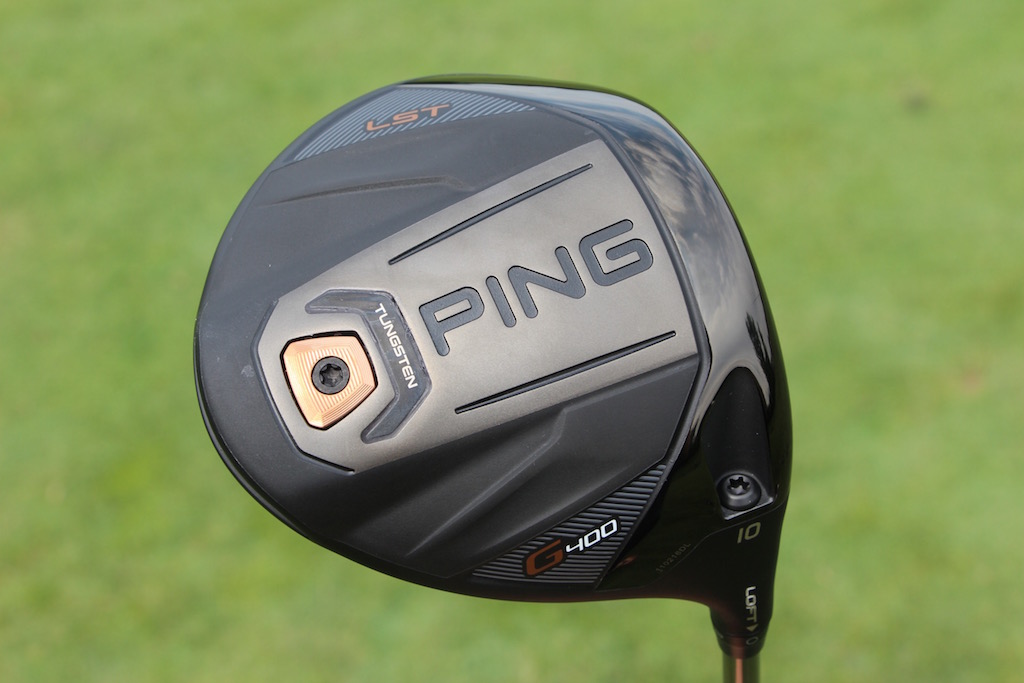
It’s been nearly three years since the release of the G30, and Ping has just made another counterintuitive driver release. The company shrunk the size of its new G400 drivers in a climate where full-size drivers have become the norm. Granted, it’s only 15 cubic centimeters smaller, but it’s noticeable at address. Compared to the Ping G drivers they replace (which replaced the G30), the G400’s look like they cut carbs.
Despite their slimmer frames, however, the G400 drivers are actually more forgiving than the G drivers (which were even more forgiving than the G30). That’s why Ping representatives say smaller is actually better in the G400’s case. The drivers have the lowest, most rearward CG of any Ping drivers ever, and their smaller size is said to improve their aerodynamics so golfers can swing them fractionally faster. The other big change is a new face material made of T9S+ titanium, which is thinner and more flexible to help golfers generate more ball speed.
More from the GolfWRX archives
- From the GolfWRX archives: Callaway X Forged editor review
- From the GolfWRX archives: Reviews of TaylorMade’s 2019 P790 irons from 6 GolfWRX Members
- From the GolfWRX archives: Best putter of 2021
Editor’s note: Looking ahead to where we take our golf equipment coverage in the future, we want to look behind us more frequently. What does that mean, exactly? Well, we want to both place new releases in their historical contexts and highlight past coverage by, as we have done from time to time, opening the Equipment